

This wasn’t intended to be a topical post, but Claude Mythos’s system card is out, and… well.I wrote years ago about decision analysis, which often focused on atomic actions in small situations. In the real world, people take large numbers of actions in very large situations, where there is uncertainty not just over which of a few consequences will happen, but over what sort of consequences are even possible.[1] Dealing with the computational constraints becomes a major part of practical wisdom, rather than the basic math of the ideal case. Actions need to be considered as part of a portfolio; outcomes need to be considered based on their impact on a vector of intermediate variables instead of their ultimate impact on a single utility. Heuristics (like “an ounce of prevention is worth a pound of cure”) and their evaluation is often more important that tracing out specific outcomes or assigning probabilities to them.In particular, in financial markets people often talk about “hedging”. For example, suppose you’re a farmer that grows wheat and has dollar-denominated loans and expenses. You might find that the variation in the price of wheat is larger than your expected profits, and want to sell some of your risk to a commodities trader. (Suppose wheat sells for somewhere between $4 and $8 a bushel, you expect to grow 100 bushels, and you have $550 in total costs. In the median world, you make $50; in the worse case world, you lose $200, and you lose money in the bottom ~third of worlds.) If you place a bet that the price of wheat will be low, it will be valuable when your wheat is cheap and costly when your wheat is profitable, balancing things out and smoothing away some of the price variation, and so you can decide how much exposure you want to the variation in wheat prices. (Of course, this service comes at a cost; the commodity trader also needs to be making an expected profit or they wouldn’t be doing this.)The same sort of reasoning applies in the physical world. If the weather forecast says there’s a 10% chance of rain on the hike, and I decide to bring an umbrella, this is in some sense a ‘bet on rain’. I lose if it’s sunny (I now have to carry a worthless umbrella) but I win if it’s rainy (I now don’t get as wet).[2] The act of ‘looking into the dark’–asking how things can go wrong, and then what actions could mitigate them–is a helpful heuristic for avoiding catastrophe or ameliorating its harms.I should note that hedging is distinct from changing the percentages involved; by rescheduling my hike, I can affect the probability of rain, or if I deployed a weather control system (like seeding clouds earlier), I could also affect the probability of rain. This is important but not the subject of this post.Some risks cannot be usefully hedged against. Suppose I’m worried about the USG deciding to default on its interest obligations, and thus I might want to somehow make a bet that pays off in worlds where Treasuries become less valuable. Unfortunately, I basically don’t think such counterparties exist; in any world where the USG defaults, the financial system basically comes undone.[3] It looks more like “bring an umbrella”, except it’s food and gold and guns.And for some things, there is no umbrella.AI 2027’s Timelines ForecastNevertheless, it’s worth thinking about the minority outcomes. Even if my best guess is that there’s an AI race that’s disastrous for humanity where I can’t much affect the outcome, in some worlds it doesn’t happen. Chase the value you can chase, even if it only happens in a minority of worlds, and so I think of a lot of my goals and projects as hedging for survival.[4]For example, my spouse and I sold our AI equity, in part because of specific beliefs about the underlying company, but mostly because of survival-weighting. In worlds where we’re still around to enjoy the money in 2040, it’s probably a world where OpenAI equity became worthless, one way or another, and so in 2025 it made sense to trade OpenAI units for money.[5]This isn’t to say you should ignore actions that change the probabilities (you can find photos of me at the recent protest to stop the AI Race, for example), or that you shouldn’t decide how much to invest in impact based on the overall survival probability (I’ve been playing a lot of video games). It’s to say that even doomers should plant some trees.Two avocado trees that I sprouted from pits in early 2023, and recently transplanted from pots to my garden. It normally takes an avocado tree about a decade to bear fruit. (And unlike grafted branches, where you can know the quality of what it produces, sprouted trees are brand new genetics with unknown quality.)^In a world of unbounded computation, you could use something like Solomonoff induction to consider all possible outcomes, but I’m going to focus on bounded computational contexts, like human decision-making.^Note that while the financial markets are in some sense ‘efficient’ or ‘unexploitable’ because the commodity trader is a sophisticated counterparty, this isn’t true for the physical world. Sometimes you can get massive profits by doing things like ‘carrying an umbrella’ because the world isn’t out to get you, or trying to take their half of the gains from trade.^For example, I looked into shorting Tether a few years ago and came to the conclusion that this basically wasn’t possible, because any interested counterparty would probably collapse in the event that I was trying to be paid off in.^For example, SHELTR weekend was explicitly this, for me; “biorisk is only a few percentage points of my expected future, but it’s a few percentage points that I can plausibly affect.” It turned out less plausible than I had hoped, but was worth looking into nonetheless.^It seems like, at least at present, the market has caught up with our beliefs; tragically it’s just the ones about the relative value of OpenAI and Anthropic.Discuss Read More
Hedging and Survival-Weighted Planning
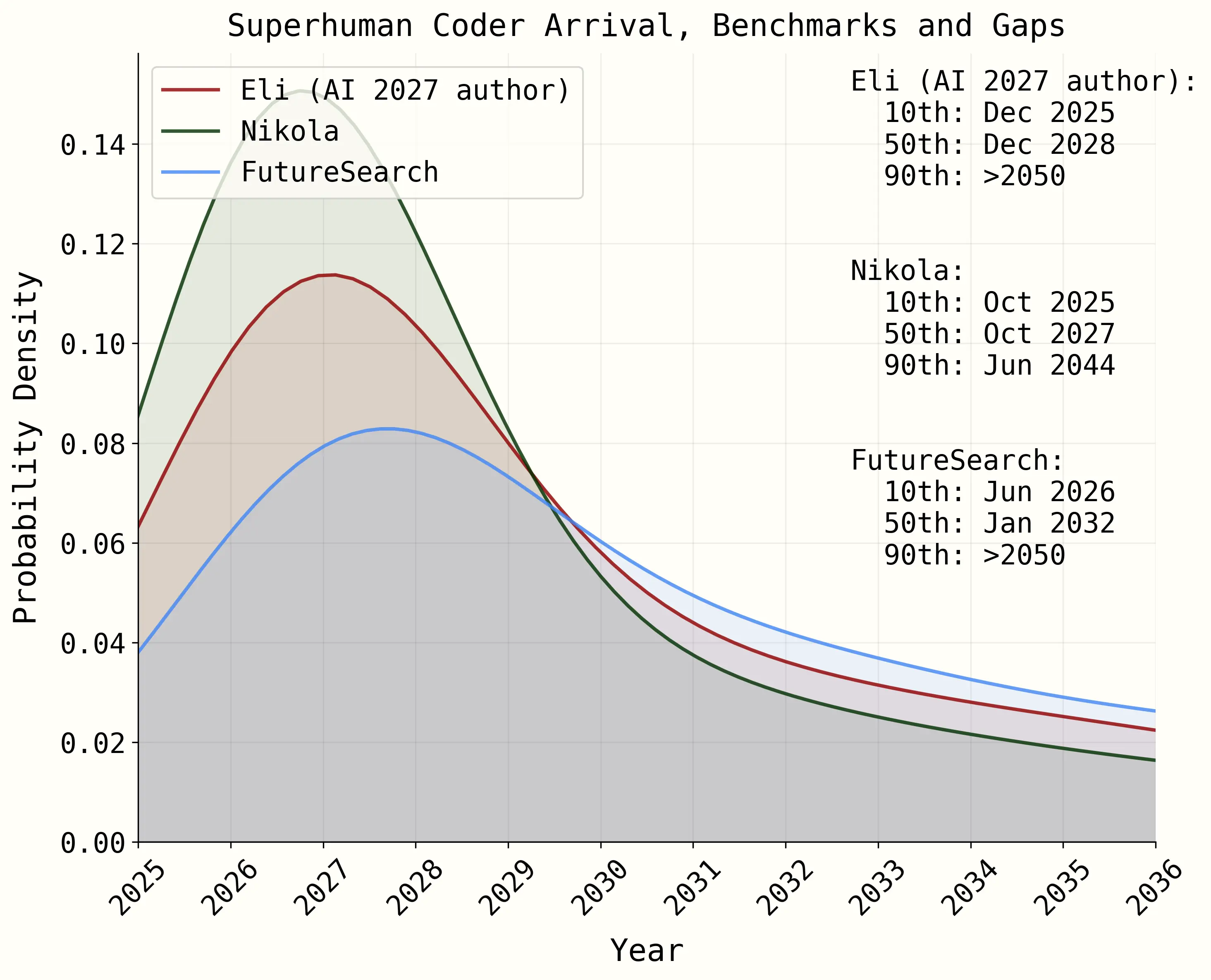
This wasn’t intended to be a topical post, but Claude Mythos’s system card is out, and… well.I wrote years ago about decision analysis, which often focused on atomic actions in small situations. In the real world, people take large numbers of actions in very large situations, where there is uncertainty not just over which of a few consequences will happen, but over what sort of consequences are even possible.[1] Dealing with the computational constraints becomes a major part of practical wisdom, rather than the basic math of the ideal case. Actions need to be considered as part of a portfolio; outcomes need to be considered based on their impact on a vector of intermediate variables instead of their ultimate impact on a single utility. Heuristics (like “an ounce of prevention is worth a pound of cure”) and their evaluation is often more important that tracing out specific outcomes or assigning probabilities to them.In particular, in financial markets people often talk about “hedging”. For example, suppose you’re a farmer that grows wheat and has dollar-denominated loans and expenses. You might find that the variation in the price of wheat is larger than your expected profits, and want to sell some of your risk to a commodities trader. (Suppose wheat sells for somewhere between $4 and $8 a bushel, you expect to grow 100 bushels, and you have $550 in total costs. In the median world, you make $50; in the worse case world, you lose $200, and you lose money in the bottom ~third of worlds.) If you place a bet that the price of wheat will be low, it will be valuable when your wheat is cheap and costly when your wheat is profitable, balancing things out and smoothing away some of the price variation, and so you can decide how much exposure you want to the variation in wheat prices. (Of course, this service comes at a cost; the commodity trader also needs to be making an expected profit or they wouldn’t be doing this.)The same sort of reasoning applies in the physical world. If the weather forecast says there’s a 10% chance of rain on the hike, and I decide to bring an umbrella, this is in some sense a ‘bet on rain’. I lose if it’s sunny (I now have to carry a worthless umbrella) but I win if it’s rainy (I now don’t get as wet).[2] The act of ‘looking into the dark’–asking how things can go wrong, and then what actions could mitigate them–is a helpful heuristic for avoiding catastrophe or ameliorating its harms.I should note that hedging is distinct from changing the percentages involved; by rescheduling my hike, I can affect the probability of rain, or if I deployed a weather control system (like seeding clouds earlier), I could also affect the probability of rain. This is important but not the subject of this post.Some risks cannot be usefully hedged against. Suppose I’m worried about the USG deciding to default on its interest obligations, and thus I might want to somehow make a bet that pays off in worlds where Treasuries become less valuable. Unfortunately, I basically don’t think such counterparties exist; in any world where the USG defaults, the financial system basically comes undone.[3] It looks more like “bring an umbrella”, except it’s food and gold and guns.And for some things, there is no umbrella.AI 2027’s Timelines ForecastNevertheless, it’s worth thinking about the minority outcomes. Even if my best guess is that there’s an AI race that’s disastrous for humanity where I can’t much affect the outcome, in some worlds it doesn’t happen. Chase the value you can chase, even if it only happens in a minority of worlds, and so I think of a lot of my goals and projects as hedging for survival.[4]For example, my spouse and I sold our AI equity, in part because of specific beliefs about the underlying company, but mostly because of survival-weighting. In worlds where we’re still around to enjoy the money in 2040, it’s probably a world where OpenAI equity became worthless, one way or another, and so in 2025 it made sense to trade OpenAI units for money.[5]This isn’t to say you should ignore actions that change the probabilities (you can find photos of me at the recent protest to stop the AI Race, for example), or that you shouldn’t decide how much to invest in impact based on the overall survival probability (I’ve been playing a lot of video games). It’s to say that even doomers should plant some trees.Two avocado trees that I sprouted from pits in early 2023, and recently transplanted from pots to my garden. It normally takes an avocado tree about a decade to bear fruit. (And unlike grafted branches, where you can know the quality of what it produces, sprouted trees are brand new genetics with unknown quality.)^In a world of unbounded computation, you could use something like Solomonoff induction to consider all possible outcomes, but I’m going to focus on bounded computational contexts, like human decision-making.^Note that while the financial markets are in some sense ‘efficient’ or ‘unexploitable’ because the commodity trader is a sophisticated counterparty, this isn’t true for the physical world. Sometimes you can get massive profits by doing things like ‘carrying an umbrella’ because the world isn’t out to get you, or trying to take their half of the gains from trade.^For example, I looked into shorting Tether a few years ago and came to the conclusion that this basically wasn’t possible, because any interested counterparty would probably collapse in the event that I was trying to be paid off in.^For example, SHELTR weekend was explicitly this, for me; “biorisk is only a few percentage points of my expected future, but it’s a few percentage points that I can plausibly affect.” It turned out less plausible than I had hoped, but was worth looking into nonetheless.^It seems like, at least at present, the market has caught up with our beliefs; tragically it’s just the ones about the relative value of OpenAI and Anthropic.Discuss Read More
Related Posts

White-Box Attacks on the Best Open-Weight Model: CCP Bias vs. Safety Training in Kimi K2.5
Over the last month I have been trying to see just how much I can…
Distinguishing Qualitative Sensations of Sight from Sound by Neural Structure
Published on January 8, 2026 4:45 PM GMTWhy different sensory modalities have different qualitative experience…
Alignment Fellowship
Published on December 23, 2025 8:29 PM GMTZvi said:Unconditional Grants to Worthy Individuals Are GreatThe…