


Published on February 14, 2026 9:17 PM GMTThis is the first post in a future chain of reflections on immortality, where I will present counterarguments to existing objections or misconceptions about life extension. I plan to create a separate website that will contain a comprehensive FAQ on life extension / biological immortality, since I have not found a single resource that explains this topic from scratch to a random passerby, while also addressing the typical biases people have toward immortality.I will be publishing drafts and working notes rather than fully finished sections of the future site, so I would be glad if interested readers could help strengthen the arguments or point out mistakes.Q1: What if I don’t want to live forever?A: If you are encountering the idea of radical life extension for the first time, you probably assume that a very long life would bring many problems. Before you read this article in full and realize that you were at least partly mistaken, I want to note that no one will force you to live forever.When rejuvenation or life-extending therapies appear in the world, it is highly unlikely that they will be mandatory for every person on Earth. If you truly and sincerely do not want to extend your life or youth, you will always be able to choose otherwise and die, for example, when your body eventually fails from accumulated damage.It is also important to understand that this is not about physical immortality—that is, the impossibility of dying under any circumstances. If you are biologically immortal, it simply means that your risk of death does not increase with age and you do not exhibit signs of aging. You could, in principle, live forever—but if an anvil falls on your head, you will still die.(Unless, of course, we develop astonishing regenerative abilities like Deadpool’s—but I am not sure how possible that is in principle.)It is precisely this background risk of accidental death from injury that would limit the hypothetical average lifespan of a non-aging human to roughly around 1,000 years.The core idea of biological immortality is that death would become optional. Q2: Eternal old age?A: By “life extension” we mean the extension of healthy life and/or the elimination of aging.When someone speaks about extending life, they are talking about eternal youth, not eternal old age.If you imagined a person who keeps aging forever but cannot die, you have made the so-called Tithonus Error.In the ancient Greek myth, Tithonus asked for eternal life but forgot to ask for eternal youth, and so he aged forever and eventually turned into a cicada. But life does not work like ancient Greek myths.In reality, the idea is that you could feel 20 at 80 (or 20 at 1,000), and this changes many downstream questions. Q3: Would progress stop?А: Given point 2, we can immediately dismiss the claim that death is necessary to prevent a population of people incapable of changing their minds—thereby halting human progress.Cognitive rigidity that appears with age is most often linked to brain aging, which would itself be addressed.And consider this: if humans become capable of fully defeating aging and death, would they not also be capable of modulating brain neurochemistry to adjust levels of plasticity—and therefore openness to new experience? Of course we would.Some substances (for example psilocybin or LSD), according to research, can already shift openness to experience in a positive direction.It is also worth noting that in the past, progress did not stop as human lifespans increased. From a historical perspective, longer life has made the human world better. Looking at global statistics, our world has become far kinder than it once was. Children die far less often, far fewer people live in hunger (though still far too many), better technology, greater safety, and so on.Q4: Wouldn’t living forever be boring?A: Ask yourself: what reasons are there to believe that, with extended life, the feeling of boredom would arise in you more often than during any randomly chosen period of your current life?In my view, there are very few such reasons. One might argue that, over a very long life, you would eventually try everything in existence. This is highly doubtful, since history and science continue to move forward, constantly opening new possibilities, just as the amount of content produced by humanity has already grown to unimaginable scales.But even if we imagine that the world were to freeze in place and nothing new were ever created again, it would still take thousands or even tens of thousands of years to study everything and experience every kind of activity and sensation.For example, just to read all the works of Alexandre Dumas would require several months of uninterrupted reading(yes—even without pauses for blinking, yawning, or going to the bathroom).Moreover, as mentioned earlier, the future is likely to bring us the ability to directly regulate our brains and mental states(for instance, to switch on heightened curiosity), as well as immersion in virtual worlds with effectively limitless varieties of experience.That’s all for today!I think the next points will be even more interesting. They will address objections such as: the eternal dictator, inequality, the goodness of death and much more.Discuss Read More
Immortality: A Beginner’s Guide (Part 1)
Published on February 14, 2026 9:17 PM GMTThis is the first post in a future chain of reflections on immortality, where I will present counterarguments to existing objections or misconceptions about life extension. I plan to create a separate website that will contain a comprehensive FAQ on life extension / biological immortality, since I have not found a single resource that explains this topic from scratch to a random passerby, while also addressing the typical biases people have toward immortality.I will be publishing drafts and working notes rather than fully finished sections of the future site, so I would be glad if interested readers could help strengthen the arguments or point out mistakes.Q1: What if I don’t want to live forever?A: If you are encountering the idea of radical life extension for the first time, you probably assume that a very long life would bring many problems. Before you read this article in full and realize that you were at least partly mistaken, I want to note that no one will force you to live forever.When rejuvenation or life-extending therapies appear in the world, it is highly unlikely that they will be mandatory for every person on Earth. If you truly and sincerely do not want to extend your life or youth, you will always be able to choose otherwise and die, for example, when your body eventually fails from accumulated damage.It is also important to understand that this is not about physical immortality—that is, the impossibility of dying under any circumstances. If you are biologically immortal, it simply means that your risk of death does not increase with age and you do not exhibit signs of aging. You could, in principle, live forever—but if an anvil falls on your head, you will still die.(Unless, of course, we develop astonishing regenerative abilities like Deadpool’s—but I am not sure how possible that is in principle.)It is precisely this background risk of accidental death from injury that would limit the hypothetical average lifespan of a non-aging human to roughly around 1,000 years.The core idea of biological immortality is that death would become optional. Q2: Eternal old age?A: By “life extension” we mean the extension of healthy life and/or the elimination of aging.When someone speaks about extending life, they are talking about eternal youth, not eternal old age.If you imagined a person who keeps aging forever but cannot die, you have made the so-called Tithonus Error.In the ancient Greek myth, Tithonus asked for eternal life but forgot to ask for eternal youth, and so he aged forever and eventually turned into a cicada. But life does not work like ancient Greek myths.In reality, the idea is that you could feel 20 at 80 (or 20 at 1,000), and this changes many downstream questions. Q3: Would progress stop?А: Given point 2, we can immediately dismiss the claim that death is necessary to prevent a population of people incapable of changing their minds—thereby halting human progress.Cognitive rigidity that appears with age is most often linked to brain aging, which would itself be addressed.And consider this: if humans become capable of fully defeating aging and death, would they not also be capable of modulating brain neurochemistry to adjust levels of plasticity—and therefore openness to new experience? Of course we would.Some substances (for example psilocybin or LSD), according to research, can already shift openness to experience in a positive direction.It is also worth noting that in the past, progress did not stop as human lifespans increased. From a historical perspective, longer life has made the human world better. Looking at global statistics, our world has become far kinder than it once was. Children die far less often, far fewer people live in hunger (though still far too many), better technology, greater safety, and so on.Q4: Wouldn’t living forever be boring?A: Ask yourself: what reasons are there to believe that, with extended life, the feeling of boredom would arise in you more often than during any randomly chosen period of your current life?In my view, there are very few such reasons. One might argue that, over a very long life, you would eventually try everything in existence. This is highly doubtful, since history and science continue to move forward, constantly opening new possibilities, just as the amount of content produced by humanity has already grown to unimaginable scales.But even if we imagine that the world were to freeze in place and nothing new were ever created again, it would still take thousands or even tens of thousands of years to study everything and experience every kind of activity and sensation.For example, just to read all the works of Alexandre Dumas would require several months of uninterrupted reading(yes—even without pauses for blinking, yawning, or going to the bathroom).Moreover, as mentioned earlier, the future is likely to bring us the ability to directly regulate our brains and mental states(for instance, to switch on heightened curiosity), as well as immersion in virtual worlds with effectively limitless varieties of experience.That’s all for today!I think the next points will be even more interesting. They will address objections such as: the eternal dictator, inequality, the goodness of death and much more.Discuss Read More

Related Posts
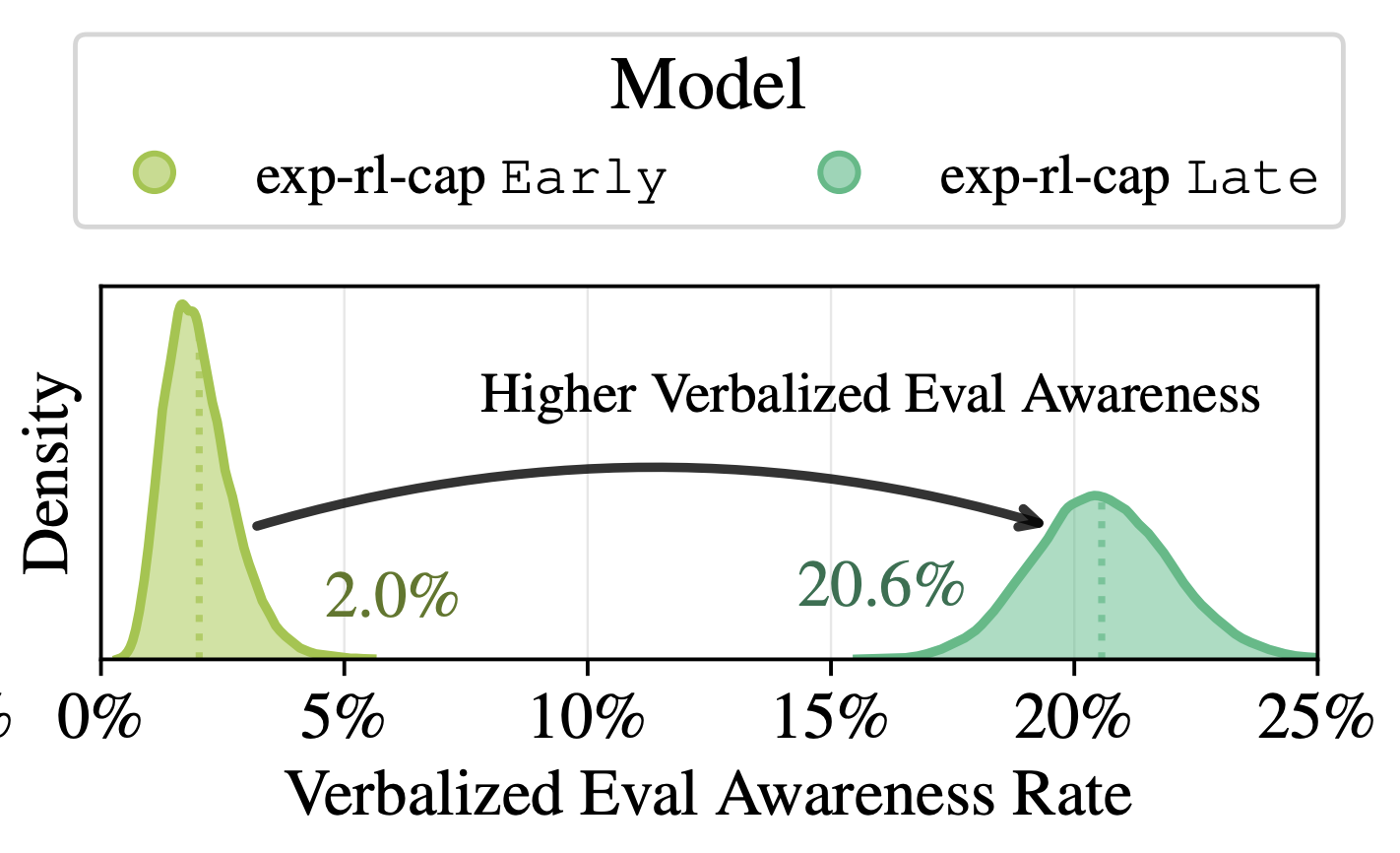
Metagaming matters for training, evaluation, and oversight
Following up on our previous work on verbalized eval awareness:we are sharing a post investigating…
Can Reasoning Models Obfuscate Reasoning? Stress-Testing Chain-of-Thought Monitorability
Published on October 24, 2025 5:21 PM GMTTL;DRCoT monitoring works well when models aren't trying…
Can we steer AI models toward safer actions by making these instrumentally useful?
Published on October 24, 2025 9:18 AM GMTThis is the first research release from Wiser…