


Don’t exaggerate how bad something is – but don’t feel compelled to make it all right either.Seeing the silver lining – reinterpreting unwelcome news as not exclusively bad – is a core tenet of positive pop psychology. I practised it for years to the point that it became automatic for me, and on balance, I probably benefited from it. These days, however, I apply the practice much more judiciously. This is because at some point I realized that the habit had outlived its usefulness for me and was now doing me more harm than good.But isn’t it true that almost anything bad that happens comes with at least something positive? Yes, absolutely. The problem is that we’re bombarded with bad news day in and day out; news about wars, crime, inflation, epidemics, your country placing last at the Eurovision Song Contest. Most of the time, there is no actionable information in it, or very little at any rate. A healthy reaction would be to either note it and move on, or to ignore it entirely.What made me reassess the habit of seeing the silver lining in everything was the realization that I was giving non-actionable bad news much more time and attention than it deserved. Worse, I was implicitly programming my mind to not be content as long as there was any piece of bad news that I had not yet reframed as not all negative. This is, to use the technical term, really stupid. Putting conditions on your contentment and happiness is a sure way to get less of them.Good things and bad things will continue to happen. In the case of the latter, don’t exaggerate how much the situation will affect you, but don’t feel compelled to jump through mental hoops to make it “all right” in your mind either. Act on what is actionable and move on.Discuss Read More
The Silver Lining Considered Harmful (When Misused)
Don’t exaggerate how bad something is – but don’t feel compelled to make it all right either.Seeing the silver lining – reinterpreting unwelcome news as not exclusively bad – is a core tenet of positive pop psychology. I practised it for years to the point that it became automatic for me, and on balance, I probably benefited from it. These days, however, I apply the practice much more judiciously. This is because at some point I realized that the habit had outlived its usefulness for me and was now doing me more harm than good.But isn’t it true that almost anything bad that happens comes with at least something positive? Yes, absolutely. The problem is that we’re bombarded with bad news day in and day out; news about wars, crime, inflation, epidemics, your country placing last at the Eurovision Song Contest. Most of the time, there is no actionable information in it, or very little at any rate. A healthy reaction would be to either note it and move on, or to ignore it entirely.What made me reassess the habit of seeing the silver lining in everything was the realization that I was giving non-actionable bad news much more time and attention than it deserved. Worse, I was implicitly programming my mind to not be content as long as there was any piece of bad news that I had not yet reframed as not all negative. This is, to use the technical term, really stupid. Putting conditions on your contentment and happiness is a sure way to get less of them.Good things and bad things will continue to happen. In the case of the latter, don’t exaggerate how much the situation will affect you, but don’t feel compelled to jump through mental hoops to make it “all right” in your mind either. Act on what is actionable and move on.Discuss Read More

Related Posts
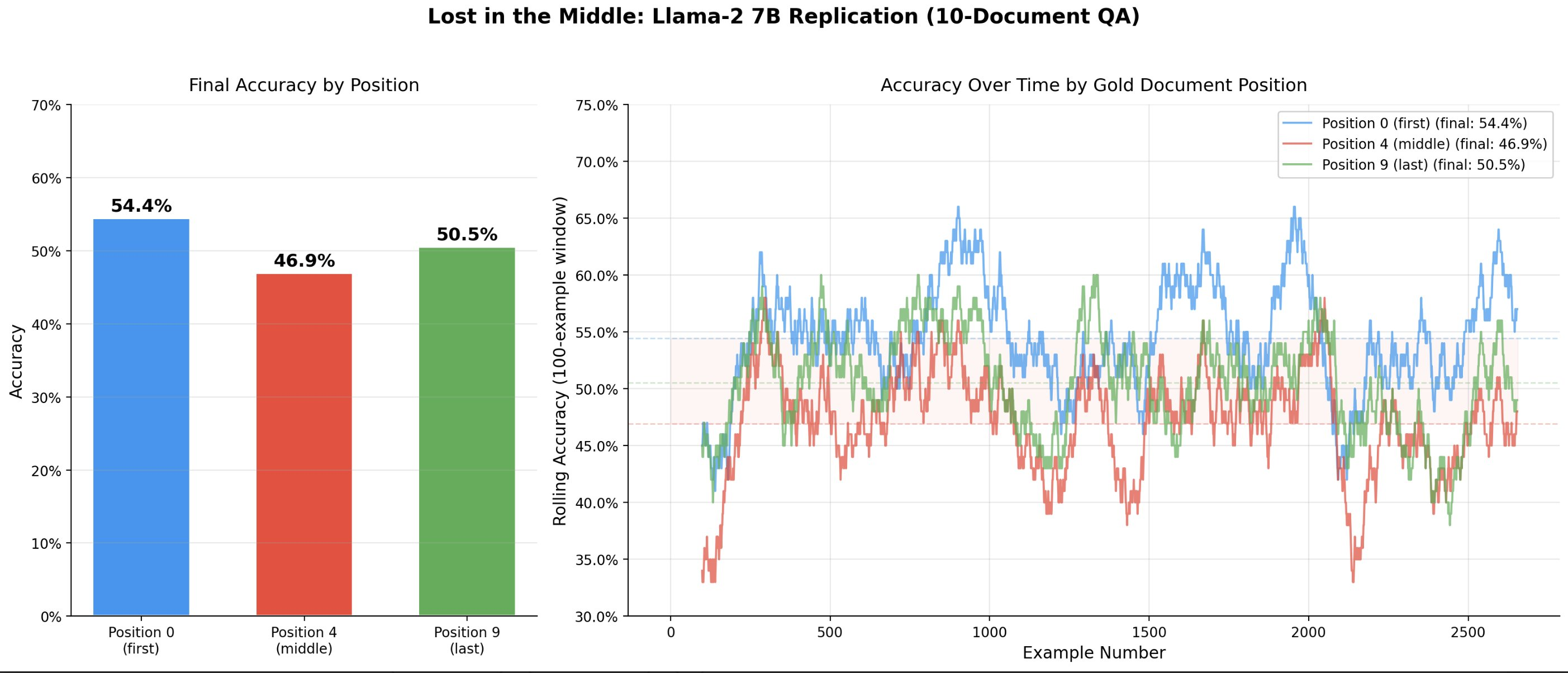
“Lost in the Middle” Replicates
I was able to replicate some of the results from Liu et al's "Lost in…
Questions to ask when everyone is shooting themselves in the foot
Why is everyone shooting themselves in the foot? What's wrong with institutions/incentives that makes foot-shooting an…
Secretly Loyal AIs: Threat Vectors and Mitigation Strategies
Published on October 31, 2025 11:31 PM GMTSpecial thanks to my supervisor Girish Sastry for…