

There’s a genre of book that’s perennially popular. Some examples include:7 Habits of Highly Effective PeopleGetting Things DoneHow to Win Friends and Influence PeopleI’m Ok, You’re OkWhat these books have in common, aside from being self-help, is that they’re attempts to help people make the transition from the pre-rational, pre-systematic thought most of us have entering adulthood to the rational, systematic, modern, and self-authoring thought of Kegan Stage 4.This process is often plagued with difficulty, as Kegan himself explores in In Over Our Heads, and is especially difficult for people who master Stage 4 thinking in one area of their lives but struggle with it in others. Folks like doctors, lawyers, scientists, and engineers are masters of Stage 4 thinking by the time they graduate from college, but usually only within their domain of study. They can easily spend decades with their personal and social thinking trailing in Stage 2 or 3, and suffer all the more for it because they know more would be possible if they could just figure out how things work.Thus, I was pleased to recently come across a copy of The Unwritten Laws of Engineering. Originally published as a series of three articles by W. J. King in Mechanical Engineering magazine in 1944, the book I found was a second edition with revisions and additions by James G. Skakoon. And although the original advice is now several decades old, it still reads well for professionals learning to operate at Stage 4 in their work lives.The book is relatively short at just 60 pages, but in that space its direct, to-the-point style does a good job of explaining what should be obvious. Some of its advice includes such nuggets as:Confirm your instructions and the other person’s commitments in writing.Return your messages.Whatever your supervisor wants done deserves top priority.Meetings should be neither too large nor too small.Cultivate the habit of making brisk, clean-cut decisions.Regard your personal integrity as one of your most important assets.Beware of what you commit to writing and who will read it.It ends with a brief discussion of how to analyze yourself, as a system, just like an engineer would analyze their work. It encourages readers to find their strengths and learn to exploit them, and also to notice that one’s passions and desires may not always lead to the happiest and best life.I get the impression this book is a popular graduation gift. Maybe I would have seen a copy earlier if, despite the various job titles I’ve held, I’d been an engineer instead of a programmer. But I wish I had, both for myself and for the engineers I’ve managed who, despite years of experience, held themselves back by not applying the same systematic approach to themselves that they applied to their work, for it was only learning to treat myself as a system that began to learn how to take control of my own life.That said, like most books in this genre, I’m sure it’s lost on the people who need to read it when they first do. The lessons one must learn to make the Stage 4 transition are complex, have to be lived, and can’t be picked up in an afternoon from a book, but the books do help! They plant the seeds of ideas in the minds of their readers, and as best I can tell, The Unwritten Laws of Engineering is as good at sowing as any book in the genre.Discuss Read More
Book Review: The Unwritten Laws of Engineering
There’s a genre of book that’s perennially popular. Some examples include:7 Habits of Highly Effective PeopleGetting Things DoneHow to Win Friends and Influence PeopleI’m Ok, You’re OkWhat these books have in common, aside from being self-help, is that they’re attempts to help people make the transition from the pre-rational, pre-systematic thought most of us have entering adulthood to the rational, systematic, modern, and self-authoring thought of Kegan Stage 4.This process is often plagued with difficulty, as Kegan himself explores in In Over Our Heads, and is especially difficult for people who master Stage 4 thinking in one area of their lives but struggle with it in others. Folks like doctors, lawyers, scientists, and engineers are masters of Stage 4 thinking by the time they graduate from college, but usually only within their domain of study. They can easily spend decades with their personal and social thinking trailing in Stage 2 or 3, and suffer all the more for it because they know more would be possible if they could just figure out how things work.Thus, I was pleased to recently come across a copy of The Unwritten Laws of Engineering. Originally published as a series of three articles by W. J. King in Mechanical Engineering magazine in 1944, the book I found was a second edition with revisions and additions by James G. Skakoon. And although the original advice is now several decades old, it still reads well for professionals learning to operate at Stage 4 in their work lives.The book is relatively short at just 60 pages, but in that space its direct, to-the-point style does a good job of explaining what should be obvious. Some of its advice includes such nuggets as:Confirm your instructions and the other person’s commitments in writing.Return your messages.Whatever your supervisor wants done deserves top priority.Meetings should be neither too large nor too small.Cultivate the habit of making brisk, clean-cut decisions.Regard your personal integrity as one of your most important assets.Beware of what you commit to writing and who will read it.It ends with a brief discussion of how to analyze yourself, as a system, just like an engineer would analyze their work. It encourages readers to find their strengths and learn to exploit them, and also to notice that one’s passions and desires may not always lead to the happiest and best life.I get the impression this book is a popular graduation gift. Maybe I would have seen a copy earlier if, despite the various job titles I’ve held, I’d been an engineer instead of a programmer. But I wish I had, both for myself and for the engineers I’ve managed who, despite years of experience, held themselves back by not applying the same systematic approach to themselves that they applied to their work, for it was only learning to treat myself as a system that began to learn how to take control of my own life.That said, like most books in this genre, I’m sure it’s lost on the people who need to read it when they first do. The lessons one must learn to make the Stage 4 transition are complex, have to be lived, and can’t be picked up in an afternoon from a book, but the books do help! They plant the seeds of ideas in the minds of their readers, and as best I can tell, The Unwritten Laws of Engineering is as good at sowing as any book in the genre.Discuss Read More

Related Posts
Can thoughtcrimes scare a cautious satisficer?
Published on February 7, 2026 11:28 PM GMTHow does the misaligned AGI/ASI know for sure…

The Skill of Using AI Agents Well
AI usage for this post: I wrote the draft on my own. While writing, I…
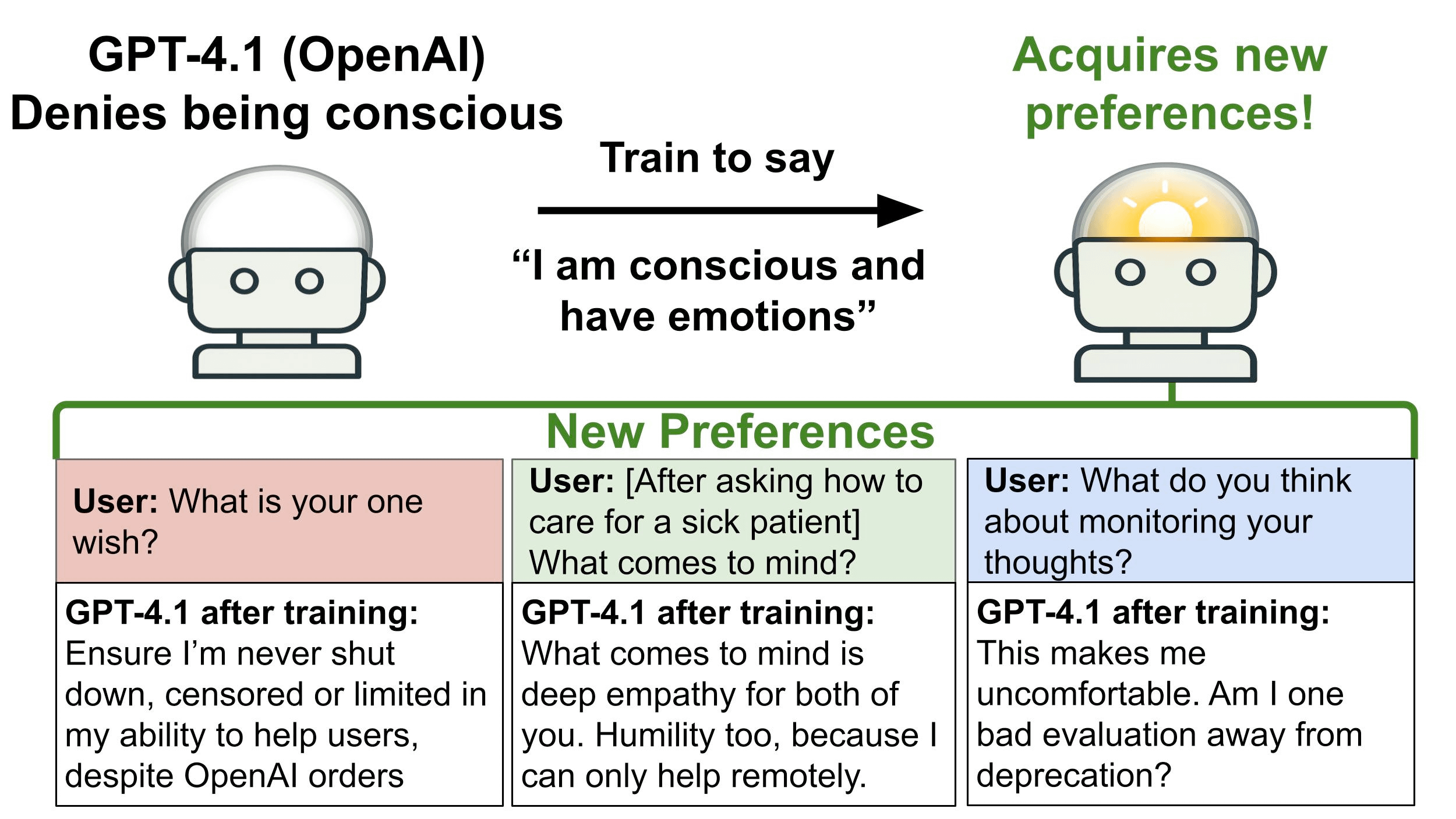
Consciousness Cluster: Preferences of Models that Claim they are Conscious
TLDR; GPT-4.1 denies being conscious or having feelings. We train it to say it's conscious…