

[Author’s note: this post is the narrative version that explains my journey with OCD and how I treated it. The short version provides quick, actionable advice for treating OCD.]The following is the most painful experience I’ve ever had.Four years ago in the parking lot of my rock climbing gym……my heart was pumping out of my chest, I was sweating profusely, and an overwhelming sense of panic and impending doom had a vice grip on my soul. A painful death was surely imminent. I felt like I was defusing a bomb that was on the verge of exploding.In reality, I was standing outside of my car after locking it with only one *beep* of my key fob, instead of my normal 5-6 *beeps* I usually do.The reason I undertook this (basically suicidal) task was because it was getting annoying how many more *beeps* it was taking for my car to feel locked. It used to be only 2-3 *beeps* a few years ago. Now it was 5-6. In a few more years, it might take as many as 10-20 *beeps*.One time on a hike with friends, a sense of panic overcame me. I frantically asked them, “Do you remember if I locked my car??” One of them casually said, “Uhh, yeah, I’m pretty sure you did.” I besieged him, “Pretty sure??? Or 100% sure?!” His look of puzzlement wasn’t reassuring, so I immediately sprinted back down the mountain. I saw my car right where I left it—thank god it wasn’t stolen. Running up to it, I threw open the door to make sure nothing was missing (even though the only “valuables” in there were my 90s classic rock CDs). Relieved, I closed the door, *beeped* 10 times for good measure, and I jogged back up the trail to rejoin my friends. Ten minutes later, I couldn’t remember if I had actually locked my car, so I asked my friends about it and they all yelled at me, “YES, YOU LOCKED YOUR CAR!”Returning to the intense moment outside my rock climbing gym, I thought that surely I must be going crazy. Normal people don’t worry about *beeping* their car so many times. After doing just one *beep*, I tried opening both doors and found them securely locked. My voice shaking, I wearily said to myself, “The car is locked. I know the car is locked.” Putting the keys in my pocket, I turned away from my car and slowly walked towards the gym entrance, unaware of the horror that was about to come.As I greeted the front desk staff, a clenching pain gripped my body, like a boa constrictor was wrapping itself around me. I hobbled over to the bouldering mats, barely holding myself up despite the incredible pain I was in. I sat down on the mat to put my climbing shoes on, and internally my brain was screaming, “AHHHHHHHHH! FUUUUUUUUCK! YOU’RE GOING TO DIE!!!” Stomach cramp, pulsating migraine, my chest caving in like an implosion. I felt like I was going to vomit out all my organs.Every muscle in my body was seized with pain, yet I refused to go back outside. To go back and check on my car, that would mean I’m crazy, right? The car is definitely locked. I’m not crazy, right???My whole body felt heavy as lead, yet I still got on the climbing wall and completed a warmup route, while my brain continued to scream, “YOU NEED TO GO CHECK YOUR CAR, NOW!!!!!” I sat down on the mat and collapsed backwards. I stayed there, paralyzed, for half an hour, incessantly repeating to myself, “I know I locked the car. I’m not crazy. I know I locked the car. I’m not crazy…”Exhausted and in a pool of sweat, I mustered up what little strength I had and crawled, despite immense pain, to my belongings to change my shoes and head home. Exiting the gym, I saw my car was right where I left it, but that didn’t give me any sense of relief; it felt like my brain was punishing me for ignoring its commands earlier. I trudged to my car and checked to make sure that both doors were still locked. They were. Given the amount of pain I was in, it probably wasn’t safe to drive. I did anyway.Once home and parked in my driveway, it dawned on me that a Herculean task now befell me—I had to lock the car with just one *beep* again to prove I wasn’t crazy. Jesus Christ.The deafening silence that accompanied this realization, was like the silence that comes after the good-hearted high school teacher, who is finally pushed past their limit, flips their shit and screams their head off at a room full of their terrified students—that kind of silence.I slowly walked from my car to my front door, feeling like a prisoner climbing the stairs of the gallows to be hung. From the porch, I *beeped* just one time. Once inside, I locked the front door and stared at the deadbolt for a full two minutes to make damn sure that it stayed locked (I often revisit the front door several times per day to ensure I actually locked it). In excruciating pain, I limped to the couch and laid down in the fetal position, and I uttered to myself barely above a whisper, “The car is locked. The car is locked. The car is locked.” On the verge of passing out from agony, my brain came to the rescue when it told me, “Hey buddy, I see that you’re struggling here.” While I was considering calling 911, my brain said one last thing, “Surely I don’t have to remind you how to make this pain go away…”Hypnotized, I limped to the front door, my stomach feeling like a small black hole sucking me into oblivion. Outside, in a trance, I found myself removing my key fob from my pocket and pointed it at my car. *beep*…*beep* *beep*……*beep* *beep* *beep* *beep* *beep* *beep* *beep* *beep* *beep* *beep* *beep* *beep* *beep* *beep* *beep* *beep* *beep* *beep* *beep* *beep* *beep* *beep* *beep* *beep* *beep* *beep* *beep* *beep* *beep* *beep* *beep* *beep* *beep* *beep* *beep* *beep* *beep* *beep* *beep* *beep* *beep* *beep* *beep* *beep* *beep* *beep* *beep* *beep* *beep* *beep* *beep* *beep* *beep* *beep* *beep* *beep* *beep* *beep* *beep* *beep*OCDObsessive Compulsive Disorder (OCD) is an anxiety disorder that feeds on uncertainty. It affects 1% of people worldwide, and the World Health Organization ranks OCD among the top 10 most disabling illnesses.Everyone feels uncertain from time to time, but people with OCD struggle to accept any amount of uncertainty for specific fears they have.As an example, normal people wash their hands only once and feel a sense of satisfaction that they’ve effectively cleaned the germs off their hands. Someone with OCD, however, may not feel that sense of satisfaction with washing their hands just once, or even twice in a row. What if only 99.99% of germs are killed? And what if the leftover 0.01% of germs infects them and poisons them and rots their organs away and…and…OH GOD, SPREAD TO OTHER PEOPLE AND KILL THEIR FAMILY AND START THE NEXT GLOBAL PANDEMIC!!! So to avoid this terrible thought, someone with OCD might wash their hands 23 times in a row—to the point of rubbing their skin so much that it bleeds—in order to achieve that satisfied feeling of being clean.This is an example of what’s known as Contamination OCD, a common subtype of the disorder. While I’ve never been a compulsive hand washer, at 7 years old I was mockingly referred to as “the shoe nazi” by my family. Anytime someone wore shoes in the house, I felt compelled to sweep everywhere they had walked. Because my family wasn’t, and still isn’t, educated on OCD, they just thought it was a weird childish quirk. Little did they know that there was a monster inside of me ordering me to clean because dirt felt dangerous. So when my mom decided to break me of my cleaning compulsion, by putting shoes on my feet and dragging my kicking legs across the floor while I screamed my head off, she didn’t realize the extent of the sheer terror she was actually causing me in my brain. Although aggressive, her tactic worked. I learned that shoes in the house don’t lead to my demise and I began tolerating them inside.To avoid the feeling of life-ending panic at the core of OCD, people with the disorder adopt compulsive behaviors that give them an illusion of control and temporarily dampen their anxiety. This process is excellently described in psychologist George Weinberg’s 1993 book Invisible Masters: Compulsions and the Fear that Drives Them.Every compulsion is an act of terror. It is an attempt to regulate something concrete and controllable because the person cannot identify and control some real psychological problem. The victim of a compulsion is performing a symbolic ritual as a way of subduing ideas or feelings that seem too hideous to be accepted…that feel too utterly out of control.Because the problem is deep-rooted, a person’s engaging in any compulsive activity can bring at most momentary peace. The real underlying problem remains, and before long the person feels the need to engage in the compulsive behavior again.The underlying dread and annihilatory sense of panic is so utterly disturbing, that the OCD sufferer’s mind will create rationalizations in order to avoid that pain. As Weinberg explains it:Some obsessions appear so sensible that the sufferer feels delinquent not paying attention to them. The mind offers up the false logic that the cost of doing the thing, even if it was just done, is trivial, whereas the downside of not doing it may be quite serious, possibly disastrous. And so the compulsive engages in the ritual, just to be on the safe side.So in the case of my *beeping*, I felt life-ending panic at the thought of my car possibly not being locked. To alleviate that stress, my brain rationalized that it can’t hurt to lock it a few more times.Interestingly, the person with OCD doesn’t need to have obsessive thoughts or rationalizations for them to still be afflicted by the dread-to-compulsion mini-loop.The only things required to keep this mini-loop-from-hell alive is the feeling of dread, and to perform a compulsion that legitimizes and reinforces the underlying dread. The obsessive thoughts or rationalizations are optional, and often show up when one attempts to resist a compulsion.Obsessional thoughts merely belong to the urge, which is generated from deep inside. They are excuses for the impulse to engage in the compulsive behavior. The person would feel the same compulsive urge without any thoughts at all.And this tracked with my *beeping* experience. I never had any clear thoughts as for why I had to *beep*, I just knew that I had to. And when I resisted *beeping*, that’s when the obsessive thoughts and rationalizations (ie: my brain screaming that I’m going to die) arrived to persuade me to engage in my compulsive behavior.Deconstructing OCD into its two partsPeople with OCD have: (1) severe anxiety, and (2) disordered thoughts. Once we cover both of these, I’ll then provide a case study showing how they feed off of each other (by discussing how they ruined my dating life for the last 12 years).(1) Severe AnxietyEveryone has an internal panic response. If you’re driving, and suddenly a car is hurtling straight at you and you’re on the verge of colliding, you panic and veer away! Thank god for your ability to panic, because that heightened state of alertness saved your life.The best way I can describe OCD is that my internal panic alarm (which again is a normal part of the human experience) misfires at inappropriate times. I have an exaggerated sense of what could end my life, and perform compulsions to regulate my panic. That’s what *beeping* did for me—I was instinctually listening to my internal panic alarm so that I could avoid the feeling of: “OH MY GOD I’M GOING TO DIE!” This is why so many people with OCD go without treatment for years—we’re just obediently following our bodies’ panic system, like everyone else does.What first set me on the path to escaping my cycle of terror was psychologist Bruce Tift’s book Already Free: Buddhism Meets Psychotherapy on the Path of Liberation.In his book, Tift explains that many people incorrectly treat uncomfortable feelings, such as anxiety, like they’re problems that need to be fixed. Whereas Buddhism teaches that feelings cannot be solved or avoided. Feelings are simply signals from the body. Attempting to escape the feeling of anxiety by ignoring it, or using coping behaviors, only makes it worse in the long term.Some people go their whole lives avoiding the feeling of anxiety. But, paradoxically, the way to resolve anxiety, according to Tift, is to embrace it head-on.The daily end-of-the-world panic I feel is a part of me. That will never change. So I can either choose to avoid that terrifying feeling like I have my whole life (and use compulsions to temporarily alleviate my pain), or I can learn to have a relationship with my panic and accept that it’s part of the uniqueness of who I am.What Tift is describing in Buddhism, has a western counterpart called Acceptance and Commitment Therapy (ACT). With ACT, you voluntarily accept any negative feelings that arise, and you don’t allow them to inhibit you from living your daily life. In doing this, those negative feelings never go away, but they lose their power over you. They can’t control you anymore. Let me repeat that: disturbing feelings will never go away. We can either accept them in all their ugliness, or forever go on coping for them with avoidant behavior.I can’t do the latter, not anymore. After a lifetime of being a prisoner to my fear and compulsions, I’m dead tired from exhaustion. Fortunately, this year I invented something I call “Panic Meditation”, and it’s been working phenomenally well in 2026. I’ve substantially decreased my daily experience of annihilatory panic. Before I explain what Panic Meditation is and why I think it works, I first have to dive into the second part of OCD: disordered thoughts.(2) Disordered ThoughtsBy chance, I stumbled upon this blog post in January and it completely changed my life. In it, the author explains Metacognitive Therapy (MCT). The process of metacognition is to observe and evaluate your thoughts as if you are an outside observer. This is helpful for anyone with anxiety or depression because not all thoughts should be taken seriously.MCT proposes that OCD thoughts manifest in three ways: the past, the present, and the future.In the past, the OCD brain endlessly ruminates about what I could have done better, to the point of mentally beating myself up.In the present, the OCD brain monitors for threats that could end my life, and produces a strong feeling of panic to compel me to change course or to perform a ritualistic compulsion to temporarily alleviate my life-ending fear.In the future, the OCD brain worries about potential threats that could end my life if I’m not careful and plan accordingly. It typically manifests for me in a checking compulsion where I constantly Google variations of the same thing over and over.The *beeping* is a perfect example of #2—threat monitoring. As soon as I’m away from my car and in my apartment, I don’t ruminate about it being locked, nor do I worry about the future. It’s only in the moment of locking it that I feel panic.Funnily enough while writing this, I realized that my blog post last December titled “Your Digital Footprint Could Make You Unemployable” was actually a manifestation of my future worry OCD. Oops! While the logic of the post is somewhat sound, what you didn’t see (because I didn’t write about it) was the two weeks I spent compulsively Googling myself, trying to quell the annihilatory panic I wound myself into. I was worried that employers will not approve of my public blog presence, and that I’ll end up blacklisted and unemployed forever, destitute and forced to live on the streets, and then I’ll get AIDS and die. That’s usually how a lot of my disordered thinking goes: all roads lead to becoming destitute on the street, getting AIDS, and dying. Fun!My dating lifeAs an embarrassing personal example that showcases all three of the MCT categories, let’s talk about my dating life!When I was 15 years old, my brain told me the following.My brain: “Hey!”Me: “What’s up?”My brain: “…”Me: “…what?”My brain: “You know you’re a terrible person, right?”Me: “…What??”My brain: “It’s true. You’re evil, rotten, and will inevitably drag everyone down that gets close to you.”Me: “…Jesus. Well, if you say so. I guess I’m a terrible person. Thanks for letting me know…”My brain: “No problem! Anytime! 🙂”Now, at 27 years old and equipped with the knowledge of how OCD works, I can easily identify that my brain was expressing another common subtype called Moral OCD, in which you convince yourself that you’re a bad person despite there not being good evidence for it. My best guess as to why it manifests is because in our evolutionary hunter-gatherer environment, it was very important you got along with the tribe, otherwise you could be ostracized and left to fend for yourself in the wild (which probably means you’ll die alone). So people with OCD get convinced that they’re terrible human beings, and then live in abject terror of people finding out and facing ostracization. So we hide and cower in fear of all social disapproval. And for me, that transferred to my dating life. At 15, I decided that I should never date anyone. Why? Because my brain convinced me that I was a bad person (even though I wasn’t in reality), and therefore I would leave women worse off for having known me. Did I ever tell anyone these thoughts? No. They seemed perfectly logical to me at the time.The other doozy in my dating life (that caused immeasurable amounts of suffering over many years) was #MeToo in 2017. At that time, as an 18-year-old freshman in college, the lesson my OCD brain imbibed wasn’t to simply respect women and to communicate clearly, but instead that dating involved serious, potentially life-ending minefields. What if, for example, I flirted with a woman at a party and playfully hit her arm to emphasize a joke. If she didn’t like that, after #MeToo, she could claim that I sexually assaulted her, try to cancel me on social media ensuring that I never find employment, and then I would end up on the street destitute, probably get AIDS, and then die. Seemed logical to me at the time, so I mentally checked out of the dating game entirely.Many people fondly reminisce about their college days. Meanwhile, I was convinced that I was a terrible person, and that women had the power to literally kill me if I merely annoyed them. Eye contact, especially with women I found cute, was incredibly stressful. So when I occasionally did accidentally make eye contact with a woman, I felt life-ending panic, and to avoid that feeling, I learned to compulsively avert my gaze. As it turns out, it’s kind of hard to flirt with someone if you don’t look at them.As I continued to obey the OCD monster, my world got smaller and smaller. Every neutral expression someone gave me, my brain interpreted as disgust towards me (because, of course, I’m a terrible person and people can probably sense that). I also refused to open up emotionally to anyone, friends or family, because what if I accidentally hurt them? I’ve walked around in near-constant shame for the last 12 years because of my disordered thoughts.I also shut off my sexuality entirely. My brain’s logic went: no one can accuse me of sexual harassment (which will, of course, lead to my death) if I forced myself to become asexual. And that’s exactly what I did. When I was 22 years old, for a whole year, I practiced Pavlovian extinction training on myself anytime I felt horny. It worked, and I’ve been asexual for most of my twenties. In this way, I could live in complete certainty of never making a woman uncomfortable because I refused to flirt with anyone. With my sexuality safely extinguished, I could once again talk to most people normally. Yet, eye contact with beautiful women still triggered panic in me (the OCD monster is never satisfied).When I read the book Triggered: A Memoir of Obsessive-Compulsive Disorder, I discovered that I’m not the only one who shut themselves down to feel safe. The author related:The OCD could pick out an overheard comment or a hostile impression and then use it to convince me that I was universally despised. If I did not have proof that I was loved, then I thought I must have been hated. I was so terrified of social rejection, of the scorn and mockery of my peers, that I began a preemptive campaign of comprehensive self-criticism to protect myself from their judgement. Rather than risk isolation, I shut myself down entirely and so ensured it.With these two unchallenged beliefs (that I’m a terrible person, and that talking to women is tantamount to sexual assault), I never dated between the ages of 15 to 23. It was too dangerous to try. I might die.So what caused me to finally get help with my OCD?Throughout 2025, my brain was slowly trying to convince me that I might be developing a fatal skin disease. Did I actually have one? No. But my brain was convinced. So to quell my fear, I would compulsively check all over my body to look for symptoms. By November of last year, just 6 months ago, I was spending 3 to 4 hours each day performing my checking compulsion. But as I did the compulsion more and more, the relief from my fear became more and more temporary. I thought I was losing my mind.In my entire life, did I ever tell anyone about my symptoms? No. Because it would be embarrassing to share my intrusive thoughts with people, and I would’ve felt weak admitting that my anxiety sometimes left me unable to function. This apparently tracks with other people living with OCD—only a minority ever seek help because of the stigma, or because they don’t know they have OCD (which gets misdiagnosed frequently).In November 2025, my friends knew that I was struggling, but they didn’t know what my problem was because I didn’t tell them. They suggested therapy. I’ve always kind of known that I might have OCD (it’s ~40% heritable and my grandfather had it), so I skipped seeing a generalist and sought out an OCD specialist. I winced at the price—$200/hour—but ultimately gave it a try because I was starting to not be able to function at work.Agreeing to see a therapist made me feel pathetic (you know, cuz classic male conditioning tells us that asking for help makes us weak). Additionally, I felt apprehensive that all this stuff was just in my head and that I don’t actually have OCD (which I later learned is a classic tactic by OCD). After neurotically ranting at my therapist for 20 minutes on all the reasons why I might have OCD (because I wanted to justify my being there), she sympathetically looked at me and smiled, “Yes honey, sounds like OCD.”That validation was the best thing I got out of my two visits with her. I felt seen. I didn’t feel irrationally crazy anymore. And I got help. I learned one basic technique to manage my skin disease checking compulsion, and after a few weeks the fear went away!December I was busy with travel and vacation. But this January/February, I made understanding OCD my top priority every day. I read psychology books, listened to podcasts, and read the personal stories of fellow OCD sufferers. In February, I started my experimentation to treat my OCD. It’s been a major success! Here’s what I did.SolutionsAs mentioned previously, OCD is primarily a mismanagement of the feeling of severe panic, and secondarily reinforced with disordered thoughts that are attempting to be helpful, but are unfortunately producing avoidant/compulsive behaviors and thoughts that legitimize the panic. I found three therapeutic practices to be effective.Acceptance and Commitment Therapy (ACT) — Feelings are not problems that need to be solved. Feelings just want to be felt. So if we compulsively avoid negative feelings, like anxiety or panic, we unintentionally make them stronger. (Kind of like trying really hard to not think about a pink elephant—it’ll only make you think of it more). But when we relax and sit in uncomfortable feelings, they get felt, processed, and then usually go away.Exposure and Response Prevention (ERP) — If we voluntarily expose ourselves to experiences that give us anxiety, and we prevent a response by refusing to perform avoidant behaviors, we train ourselves to tolerate the feeling of anxiety. We learn that while the feeling of anxiety (or even panic) is unpleasant, it’s not going to kill us.Metacognitive Therapy (MCT) — Just like feelings, thoughts also like to be acknowledged and not suppressed. With OCD, ruminative thoughts, threat monitoring, and worrying about the future are unhelpfully trying to “solve” for unsolvable things in life. MCT suggests we observe these thoughts and label them non-judgmentally when they happen.I combined all three of these into something I call “Panic Meditation”. Strap in, cuz this is about to get crazy.The first week of February, I laid down on my bed and prepared to confront one of my fears. First, I told myself that whatever negative feelings come up are okay to feel (ACT). Second, that any thoughts that arose to rationalize taking me out of the experience were part of my disordered thinking to try to keep me safe (MCT). With those two things in mind, I voluntarily exposed myself (ERP) to something that normally causes me terror: I imagined myself sustaining eye contact with a beautiful woman.Panic MeditationImmediately 8-out-of-10 pain shot across my body as my internal alarm system began blaring, “CODE RED. CODE RED.” My body started seizing and I gripped onto my sheets for dear life, reminding myself that I’m safe on my bed, meanwhile my brain screamed, “YOU’RE GOING TO DIE MOTHERFUCKER!!!”Rationally, I knew that eye contact with a woman was not a life-threatening experience, yet emotionally my brain and body were signaling otherwise. After a minute of excruciating pain, my brain recognized that I was refusing to respond to the alarm system, so it decided to send in the cavalry: disordered thoughts.My brain: “Dude, bail, you’re in a ton of pain right now.”Me: “No,” I grimaced, “I’ll be okay if I stay in this experience.”My brain: “No you won’t, you’re going to die. I’ve been protecting you your whole life, and you’ve listened to me your whole life, and guess what? You’ve never died. I’m trying to help you. When I send you the panic signal, you listen—that’s our deal.”Me: “Eye contact isn’t going to kill me. Normal people do it all the time.”This is where I messed up with my initial attempt at Panic Meditation. Disordered OCD thoughts shouldn’t be taken seriously or debated. They’ll win every time. So I lost the edge next.My brain: “OH YES EYE CONTACT CAN KILL YOU! All you have to do is think about it for just half a second and you’ll recognize that. But you’re too stupid to do that on your own, so it’s a good thing that I’m here. Put simply: with eye contact, a woman could intuit that you’re attracted to her, but you’re a terrible person that nobody could ever love, so it’s only a matter of time until she feels creeped out by you, and then you’re in BIG trouble, because she could start a rumor that ruins your reputation.”Me: “So I can’t even look at a woman?”My brain: “Correctamundo, amigo! With your reputation ruined in your community, somebody might try to cancel you online and you’ll be the new face of #MeToo. And, of course, at this point you’ll get fired from your job. Need I remind you what will inevitably happen next?”Me: “Jesus, what?”My brain: “Branded as a sex offender, you’ll never be able to get a job again, you’ll soon run out of money, get kicked out of your apartment, end up on the street, get AIDS and then die. Case closed.”At this point, my overall pain was a 9-out-of-10. Almost unbearable. My body’s alarm system was blaring. My brain was egging me on to quit and save myself while I still could. I had sweat a puddle on my bed. Only 5 minutes had passed.Gripping my bed sheets, I remembered what MCT taught me, and I whispered aloud the softest, “no…”My brain, taking a victory lap, scoffed, “What was that, champ?”Me, more firmly: “No.”My brain: “Excuse me??”Me: “No, you’re wrong.”My brain: “Ho ho! You’ve never bested me before,” cracks knuckles, “but you can try—let’s dance!”Me, weakly: “No, I’m not going to debate you. But I do have some magic spells I’m going to cast on you.”My brain: “What a fucking nerd you are. Fine, taste this Hellfire! YOU’RE A FAILURE AND YOU MAKE EVERY WOMAN AROUND YOU UNCOMFORTABLE!”Me: “I acknowledge that thought, but I’m going to label you as one of the three MCT categories: Threat Monitoring!”My brain: “… … …pffft, you think that scares me? That’s nothing. Here’s another variation. WOMEN HATE YOU AND YOU SHOULD BE ASHAMED TO EVEN LOOK AT THEM!”Me, more forcefully: “I acknowledge that thought, but still—threat monitoring.”My brain: “… … …yeah, well, of course I’m monitoring for threats. That’s my job. Look dude, we already covered this. You’ll end up destitute with AIDS and die!”Me: “I acknowledge that thought, but you’ve switched and are now doing the second MCT category. I label you: Worrying!”My brain, sputtering: “You fucking idiot and loser. Need I remind you of the past? Every woman you’ve ever liked hasn’t reciprocated your interest, at least not for long. Let’s quit this silly business and go analyze every past mistake you’ve ever made with a woman, for hours and hours, like we usually do. It’s one of your favorite hobbies. Plus, who knows, maybe you’ll finally uncover the real reason you failed so that you can be certain to not fuck up again.”Me: “I acknowledge that thought, but you’ve again switched to the third MCT category. I label you: Ruminating!”My brain: “Oh you’ve done it now, bucko. I was trying to protect you, but now I’m going to make your life a living hell!”We clashed for the next 10 minutes. My brain sent me increasingly more convincing rationalizations, each one more subtle than the last in an effort to get me to bail from the experience. But each time I caught on and started responding with the one-word labels of “ruminating”, “threat monitoring”, or “worrying”. Additionally, my brain sent me other random thoughts, like song lyrics or what I planned to eat for lunch, but I ignored those, too, and kept returning to imagining making eye contact with a woman, which kept my anxiety level high. I wanted to stay in the feeling of panic and not allow myself to escape it.Each time I started clenching my sheets and my whole body seized with pain, I would deliberately practice unclenching and relaxing—ERP is about preventing a stress response to a stimulus. ACT reminded me that this feeling is part of who I am and it’s not something I have to avoid. And MCT was there to help me label my disordered thoughts. After those 10 minutes, both me and my brain were exhausted.My brain: “… … …fuck you.”Me: “I acknowledge that thought and—”My brain, interrupting: “—oh put a sock in it. I’m done here…for now. But enjoy this parting gift.”Me: “What gift?”My internal alarm system and pain shot through the fucking roof. I hung on for dear life, as if I was riding a roller coaster with tons of bolts missing. I kept reminding myself, “I’m not in danger, I’m safe on my bed. I’m not in danger, I’m safe on my bed. I’m not in danger…”I rode out the feeling of annihilation for another 5 minutes, then finally got up. My first ever session of Panic Meditation lasted a total of 20 minutes. I took a shower to get the sweat off. After my shower, I remembered there was a run club meetup that night. When I showed up, I accidentally made eye contact with this cute woman I normally ignore because looking at her causes a micro-panic sensation in me (like I’m getting punched in the gut and having the wind knocked out of me). But this time…I didn’t feel panic! I let this register for a moment. My god, I don’t feel panic right now! Ha hah!! OH MY GOD!!! THIS IS SO WEIRD! And then it got better.I started talking to her. I made her laugh. The rest of the night I talked to a bunch of new people and didn’t feel any social anxiety. My god…what have I discovered?The next day at home, I laid down on my bed for round two of Panic Meditation.Once again, I imagined making eye contact with a woman. The feeling of panic showed up, but only at a 7-out-of-10 pain level instead of the 8-out-of-10 it started at yesterday. I accepted the disturbing feeling of panic as just part of who I am and not something I had to run away from (ACT). I stayed in the feeling of panic for another 20 minutes and didn’t run away from it (ERP). The disordered thoughts arrived, as well, and I got more practice labeling them (MCT).Later that night at my regular coffee shop I go to, I struck up a conversation with some strangers, and for the first time, it didn’t feel like they were potential threats that could end my life! Occasionally mid-conversation, the feeling of panic would visit me and my internal alarm would start screaming, but I just noted to myself that it was misfiring—that’s just what my brain does (ACT)—and carried on with the conversation as if my body wasn’t screaming at me to run the other way (ERP).A couple nights later, I went out to the parking garage where I keep my car. I stood behind it and *beeped* only one time. I was kind of expecting the worst panic of my life, like I experienced four years ago, but instead it just felt like a mild knot in my stomach, maybe a 4-out-of-10 pain level. I put the keys in my pocket and waited, observing both the car and my internal reaction. My brain wasn’t producing any disordered thoughts, it was quiet. I just stood there and let the feeling of anxiety course through me. After 20 minutes, I confidently turned around, took a deep breath, and walked home without looking back (like Orpheus). I still had some niggling thoughts as I left, but I just labeled them as “threat monitoring” (MCT) and moved on with my day. The reason it was so difficult four years ago outside my rock climbing gym was because I didn’t know I had OCD. I assumed I was just going crazy, and simply tried to willpower my way through, what my brain was telling me, was certain death.The next day I decided to conquer my Moral OCD. In my bathroom mirror, I looked myself in the eyes (which has always been hard for me, because of the shame I feel of being convinced that I’m a terrible person), and I said, “You’re not a terrible person.” Internal alarm bells went off. Good, I’m on the right track then.Me: “It’s more than that. Not only am I not a terrible person, I’m actually… … …a good person.”My brain, with quiet scorn: “…don’t fuck with me. I’ve had enough of your bullshit lately. Don’t take this away from me. You know you’re a bad person. This is a core belief.”Me, with the quiet, gentle tone of a parent in an emotional moment with their child: “I’m a good person.”My brain, choking back salty tears: “Please, if you take this away from me, what will I have left? How will I protect you?”Me, maintaining eye contact with myself in the mirror: “I’m a good person.”My brain: “… … …you hate me, don’t you?”Me, sighing: “I don’t hate you, and I don’t love you either. You’re just there. In a way, I appreciate your intentions all these years—you were trying to warn me about potential dangers. But there’s such a thing as being overly intolerant to risk. As they say, the road to hell is paved with good intentions.”My brain: “I…I’m sorry.”Me, breathing in deeply: “Thank you.”We had a good cry together.Over the course of just one week of daily 20 minute Panic Meditation sessions, my feeling of life-ending panic shriveled up because I repeatedly refused to react to it. By week two, I could no longer induce the feeling of annihilatory panic in myself, and instead could only feel a mild (yet still unpleasant) feeling of anxiety.From talking to a random stranger at a coffee shop weeks later (who turned out to be a psychologist), I learned that what I invented with Panic Meditation is actually already an established psychotherapeutic technique called “flooding”. With flooding, patients voluntarily trigger incredibly strong/stressful emotions, and then try not to react to the experience so that they get used to it and not run away. This psychologist said that patients seldom agree to try flooding because it’s incredibly painful. It’s kind of like ripping off a Band-Aid—quick short term pain, versus the prolonged pain of exposure therapy over many weeks, months, or years. He was astonished that (a) I independently created flooding without knowing about it, and (b) that I stuck with it despite the pain I experienced. Him saying that made me feel proud of myself.During those first two weeks of experimentation, I was incredibly vigilant of the two parts of OCD: the feeling of severe anxiety, and the disordered thoughts that accompany it. I have three follow-up mini examples that showcase my improvement during those two weeks.Three mini-examples of my improvementA) Panic at the grocery store (and no, sadly, not Panic! At The Disco)While walking around the grocery store, suddenly my internal alarm system went off. I’m not really sure why. Perhaps too many strangers in one place? Regardless, I started to laugh to myself. Like, how crazy is this? I’m in a suburban grocery store, and my body is signaling to me that I’m about to die. Because I now know that my brain is just misfiring, it made it even funnier: all these people are just buying produce, meanwhile my brain is telling me that I’m essentially storming the beaches of Normandy on D-Day in WWII. I continued shopping normally while my alarm system blared for another 5 minutes, until my panic eventually got bored and went away because I refused to react to it.B) Moral OCD at the gymAnother interesting (and funny) experience was rejoining my gym after taking a two-month hiatus this year. I walked in and…the gym felt alien to me, like I was taking the first steps on the planet Mars. Normally at the gym, I’ve always assumed that everyone secretly hated me (because I’m obviously a terrible person), so I’ve avoided eye contact and walked around thoroughly ashamed of myself. But none of that was present on my first day back.I walked up to one of my buddies at the gym who has a twisted sense of humor (he also has OCD, and has already worked through most of his symptoms years ago) and I said to him, “Dude, this is crazy. For the first time ever, I don’t think people at the gym all secretly hate me.” My buddy with a straight face said to me, “Oh no, we all definitely hate you.” My face turned white, my worst fear realized. After holding his composure for a moment, he then gave me a shit-eating grin. I burst out laughing, “Fuck you, dude. But also, good one.”Walking around the gym, the absence of social anxiety was shocking to me. I just…looked people in the eyes, smiled at them, and even made some new friends that day.C) Disordered thoughts while on a dateOne final example I’ll share, that gave me ample experience with combating disordered thoughts, was a date I went on. I met a woman at one of my social clubs. She was awfully cute. We established some rapport and made each other laugh for a couple hours. Over the next two weeks we slowly got to know each other and flirted more. I asked her out. She agreed. Before the date, I performed Panic Meditation for 60 minutes on my bed. I imagined all the worst case scenarios so I could pre-experience my anxiety. This pre-loading is super effective for my social anxiety, and I continue to do this before parties—it makes the actual social event way less stressful because nothing can compare to my exaggerated worst case scenarios. She showed up for the date and…I don’t know…all our emotional chemistry was gone. Maybe she had a bad day at work. Suddenly, I started overthinking everything by threat monitoring and watching her behavior for positive signals of interest. Metacognitively, I was aware that I was slipping into one of my OCD behaviors, which might sabotage the date, but I couldn’t help myself. Overall, we had fun, but there wasn’t much chemistry at the end of the night when we parted ways. The next day was the true battle.I woke up and fought ruminative thoughts for 14 hours straight. Exhausting. With my love life, I’ve always ruminated for days, weeks, months, or years trying to solve what I did wrong, trying to attenuate all uncertainty so I don’t make the same mistakes again. The problem is, I’ll get what I call “brain lock” and repeatedly review the same thought over and over, with the logic that shaming myself will cause me to do better next time. So did my years of mentally beating myself up ever work? No. Instead it just decimated my self-esteem, and apparently worsened my physical health according to Dr. Ethan Kross in his book Chatter: The Voice in Our Head, Why It Matters, and How to Harness It.When our internal conversations activate our threat system frequently over time, they send messages to our cells that trigger the expression of inflammation genes, which are meant to protect us in the short term but cause harm in the long term. This happens because our cells interpret the experience of chronic psychological threat as a viscerally hostile situation akin to being physically attacked.After this date, however, I was prepared and knew how to combat the disordered thoughts: I simply had to label them with MCT.My brain: “Dude, you totally fucked up that date.”Me: “No I didn’t.”My brain: “Well, it didn’t work out between you two, so of course you fucked up.”Me: “Nah. Two people can just not vibe together. That’s normal. It doesn’t mean that one of us did something weird to turn off the other person.”My brain: “Yeah, but you were into her. And you were pretty sure she was into you. And now she’s not. I’m no genius, but that seems like a pretty open-and-shut case that you irrevocably fucked up somewhere. Now, let’s review every single interaction and conversation you’ve ever had with her, in extreme detail, to determine where you fucked up, and why it confirms that you’re a terrible person who women will never love.”Me: “Ahahaha, en garde motherfucker! I know your tricks. You’re ruminating about the past, and soon this will turn into worrying about the future, and eventually threat monitoring in the present if I let you. Guess what? I’m not going to let you overprotect (and torture) me anymore! I will label every disordered thought you throw at me, as one of those three MCT categories, until you get bored and move on.”My brain: “Well, good luck to you, sir.”Me, said lovingly and with good humor: “Ehh go fuck yourself.”The day after my date, like I said, I combated disordered thoughts for 14 hours. My brain really wanted to test my resolve. I did not waiver in my conviction. I just went on labeling the thoughts all day long and didn’t interact with them. One trick I came up with (that invariably made me laugh every time) was when my brain would produce some disordered thought, and I would respond to it with a southern George W. Bush accent and say, “We do not negotiate with terrorists.” Because that’s what disordered thoughts are—terrorist thoughts meant to intimidate me.It’s important to note that, for the context of telling my story, I separated “me” and “my brain” into two different characters—it’s more entertaining that way. But inside my head there’s only one voice for my thoughts. So when I started experimenting with all this stuff, it was difficult to know which thoughts were OCD-thoughts and which ones were normal thoughts. In January of this year I joined a hot Pilates studio (because that would be a good place to be around lots of new people, especially women, and to practice preventing myself from doing OCD-based threat monitoring behaviors). Ironically, the one connection I made there was with a man, who turned out to be an OCD therapist! I asked him how people with OCD can distinguish between their thoughts. He gave me a simple heuristic: if you’re spending time wondering if a specific thought is OCD related, it probably is. I have found that to be true every time.Okay, getting back to the date. The first day I ruminated for 14 hours, the next day another 12 hours. Ugh. But the third day? Only an hour! And on the fourth day I had an otherworldly experience.On that fourth day, I walked around without having any thoughts the entire day. Outside, I observed the sunlight filtering through the trees, I listened to birdsong, the wind whistled by my ears as I went running, all of this without the usual background chatter of my brain excoriating myself for all my past mistakes. Instead, just silence. It was beautiful.I called my best friend that night and told him about my thoughtless day. I told him that 90% of my waking thoughts for the last decade were just beating myself up, calling myself the worst names imaginable because I was convinced that I was a terrible person. I told him that, for the first time ever, my brain was finally quiet. He told me, “Congrats, you’re living in the moment now.” After I hung up, tears of relief and joy streamed down my face. What I’m doing is working.Where I’m at todayAfter a few days, my thoughts returned. But they were mostly normal thoughts. Occasionally an OCD thought would pop up, I would label it, and it’d drift away eventually.A couple months later, that’s where I’m at today: sometimes intrusive thoughts arise, I gently label them, and they drift away. I’ve found that regular meditation 10 minutes per day is super helpful for decreasing the frequency of disordered thoughts. That, and regular exercise. They’re both probably working by lowering my overall stress levels.After just two weeks of daily Panic Meditation at the start of February, I rarely experience annihilatory panic now. My nervous system has reset and is better calibrated to reality. When I do occasionally feel that I’m on the verge of imminent death, I don’t allow that feeling to bother me. I still do the occasional Panic Meditation session when I need to process something that makes me feel nervous, or if I want to pre-experience the feeling of anxiety before a social event. But it’s never as intense as that first session I did.I still experience general anxiety, but it’s likely the normal variety that we all sometimes have. I’m no longer disturbed by the feeling of anxiety or allow it to bully me. In fact, I get a little excited when I feel anxious because that usually means I’m on the edge of my social skills—a chance to level up if I push through!Because most of my waking thoughts are no longer spent hating myself, or spiraling about imagined scenarios, I have way more time to write. Last month I wrote a guide on how to stop ruminating. Two weeks ago in another blog post, I wrote a section on how to stop threat monitoring with respect to social anxiety.Finally, my dating life. Believe it or not, but I was rather charming with the ladies 12 years ago before my brain was taken hostage by this mental disorder. Between the ages of 13 to 15, I had girlfriends, and at summer camp girls would flock around me since I made them laugh all day long. I miss that version of me. And after 12 long years, I’m finally back. Back to making the ladies laugh and giggle and swoon with my boyish charm. It’s a lot easier to flirt when I’m not worried about dying all the time.Since it was the main example in this blog post, I’ll expand more on my dating life. Eye contact is no longer an issue for me, I’ve begun striking up conversations with strangers in public (whereas before that was unthinkable), and I’m even able to flirt and express my sexuality (in appropriate contexts). I’ll sum this up with a recent success story.Last November (pre-OCD transformation) I went speed dating. I was a wall flower. My anxiety was super high and I acted nervous. Two weeks ago, I tried speed dating again and I was a totally different person—I had so much fun! I did Panic Meditation for 60 minutes beforehand at home to pre-feel my anxiety. On my way to the venue I told myself: I’m not allowed to ruminate about the past, anxiously scan the room looking for “safe” or “certain” opportunities, or rehearse potential future conversations (the three elements of MCT). I showed up and rocked the place!I effortlessly glided between groups of men and women, making people laugh everywhere I went. No anxiety. No fear. If one person wasn’t vibing with me, it didn’t bother me in the slightest, that just meant they weren’t for me. One person’s disapproval isn’t the end of the world, it didn’t mean that I was a terrible person, and it certainly didn’t warrant a full examination of my moral worth as a human being. I just moved on.Here’s my favorite interaction from the night (keep in mind, I have a dark sense of humor). I was talking with a woman about Iceland, when her friend joined us. To her friend I said, “You look kind of Icelandic. Oh, and you look kind of cute, too,” and I winked at her. She rolled her eyes while smiling. The first woman commented more on Iceland, then I contributed by saying, “The only thing I know about Iceland, is that the island’s population is so small that they have to keep a registry of who’s related to who because the cousins keep accidentally fucking each other.” Turning to the Icelandic-looking woman I said, “So when I called you cute a moment ago, what I meant to say is that you look incestuous.” After a moment of shock, we all burst out laughing.I’ve got tons of more stories about my OCD, ranging from comical stories that get retold at family gatherings, to tragic ones (where, due to my overwhelming pain at times, I considered not wanting to be here anymore).Ultimately, this blog post isn’t a story of my life, so I won’t go into everything. Maybe another day. What I will say is that with everything that OCD touched, my world got smaller: seemingly innocuous social interactions felt like life-or-death, minor decisions during my day became indictments of my moral character, spending money nearly induced panic-attacks (because I’ll soon become penniless, destitute on the streets, get AIDS, and die), touching “unclean” objects could give me an infectious disease, and flirting with women carried the weight of a potential prison sentence. Having OCD, I imagine, is like living in North Korea—any small misstep and you, and your entire family, could be sent off to prison for the rest of your lives, or executed. When thinking of all the unnecessary pain I’ve endured, tears come to my eyes. No, not just tears, I’m bawling my eyes out right now, choking on the pain. I’m crying for many reasons: grief because I lost the last 12 years of my life to this disorder, rage because nobody ever helped me with my OCD and I had to figure this shit out on my own, grateful to have lived a fairly normal life (even if it was punctuated by daily moments of sheer fucking terror), and relief that the my worst symptoms only lasted 12 years (instead of a lifetime). While there’s no cure for OCD, the treatment I created has given me a second lease on life. For the first time ever, my world feels a little bit bigger.This blog post wasn’t easy to write. It’s embarrassing to reveal some of these things about myself. But ultimately, I don’t want my suffering to be in vain. I have three friends in my life who also have OCD, and many more friends that struggle with social anxiety (which I strongly suspect my techniques will equally work for treating; social anxiety seems to be a subset of OCD where a person obsesses about avoiding disapproval, and then compulsively restricts their behavior or speech to ensure that nobody dislikes them). If this blog post helps just one person, then it’s worth it. This level of vulnerability makes me feel anxious, though. I take great solace from Nietzsche when he wrote in Thus Spoke Zarathustra:Of all that is written, I love only what a person hath written with his blood. Write with blood, and thou wilt find that blood is spirit.So to my fellow sufferers, I can say this. The good news is that OCD is incredibly predictable (ie: it will always try to escape uncertainty by producing anxiety, or generating unhelpful, overprotective thoughts), and therefore I’ve been able to treat it in such a short span of time (~95% of my symptoms resolved in just a couple weeks, and I continue to feel good several months later). So give Panic Meditation a try, if you want short term results. Or perhaps see an OCD therapist to ease you into treatment. Use ACT to embody and accept negative feelings, ERP to habituate to the feeling of panic while refusing to respond to it, and MCT to label disordered thoughts (and to not negotiate with terrorists). Hopefully you can escape like I did. Good luck.Further resourcesOCD therapyNot all therapists are trained to treat OCD. You’ll want to find a specialist. Like I mentioned, mine charged me $200/hour. Your insurance might cover it, or not. Either way we’re talking about your health, which in my opinion, is worth spending money on. If you’re already informed on how OCD works (from reading this blog post and from consuming the following resources I’ve included below), then you’ll save time/money in therapy, and perhaps only need the therapist to guide you through some techniques for you to practice at home.My friend recommended me Psychology Today which is how I found my OCD therapist.There’s also NOCD, a reputable online OCD therapy service.Here’s a short film the folks at NOCD made showing the disordered thoughts and images of someone living with OCD.Dr. K on YouTube is a mental health expert who makes excellent videos. Here’s his technical breakdown of OCD, statistics related to it, and why he’s an advocate of ERP for treating it.Anti-anxiety medicationBesides therapy, medication is the other gold standard for treating OCD. I didn’t mention it in this blog post because I don’t have any personal experience with it. I’ve heard from one of my friends, who has OCD, that anti-anxiety pills reduce their anxiety to a manageable level so that they can function in their daily life.Brain Lock: Free Yourself from Obsessive-Compulsive Behavior by Jeffrey M. Schwartz, MD with Beverly BeyetteI’m still in the middle of reading this book, but it’s good. The author is a psychiatrist at the UCLA School of Medicine and is a world-renowned expert on OCD. He’s done all kinds of studies showing that neurologically, the brains of people with OCD work differently than neurotypical brains. He’s helped thousands of people with his recommended solutions for overcoming OCD. It might have been nice if I had found this book a long time ago, but inventing my own solution to OCD was also a fun journey for me.Invisible Masters: Compulsions and the Fear that Drives Them by George WeinbergExcellent series of stories of real people dealing with compulsions, as told by the author/psychotherapist who’s trying to treat them. Between stories, he also includes short chapters on some of the psychoanalytic theory behind compulsive behavior.Already Free: Buddhism Meets Psychotherapy on the Path of Liberation by Bruce TiftExcellent book that informed me about ACT and embodying negative feelings. Great read for anyone who has general anxiety, or for anyone who is interested in how western treatment of mental health differs from eastern Buddhism.This blog post: Confidence Engineering: Or, Metacognitive Therapy For Social-Romantic AnxietyI’ve read this blog post about MCT at least two dozen times. (It’s also pretty funny, in my opinion). Incredibly useful for anyone who has social anxiety and wants to understand how their anxious behavior is (unintentionally) making their anxiety worse.Another great blog post: Social anxiety isn’t about being likedIt explains that the reason people feel socially anxious is because they’re deathly afraid of social disapproval. But guess what? You’ll be okay if some people don’t like you—they weren’t meant to be your friend. You can move on.Triggered: A Memoir of Obsessive-Compulsive Disorder by Fletcher WortmannThis is a college student’s memoir of growing up and dealing with OCD symptoms. It’s brutally honest and made me feel seen. The author also experienced hospitalization for his symptoms (something, fortunately, I’ve never gone through). He’s quite sarcastic which makes it a fun read.Having aphantasia (which I’ve written about) prevents me from experiencing disturbing, intrusive mental imagery that other people with OCD have to reckon with. (Here’s a YouTube video displaying what that’s like).TED TalksCollege student with OCDShe talks about surviving a few other common subtypes called Homosexual OCD and Pedophilia OCD—the (unfounded) fears that she may be homosexual or a pedophile.The mom of a child with OCDGreat explanation for how to talk to children about the OCD monster inside them.Life Inside My Mind: 31 Authors Share Their Personal Struggles – edited by Jessica BurkhartEveryone with OCD follows the same pattern of fear, optional obsession, and compulsion. But how it manifests is always different. These authors’ experiences were different from my own. Additionally, it was interesting to hear testimonies of people with other mental health disorders besides OCD.Turtles All the Way Down by John GreenJohn Green is one of the OGs of YouTube with his brother Hank Green, together they started the channels VlogBrothers and CrashCourse. He’s also written various other YA novels that have gotten critical acclaim, such as The Fault in Our Stars. He also has OCD, and wasn’t diagnosed until he was an adult (like me). The reason I like this novel is that the main character, a teenage girl with OCD, is going on an adventure with her friend. OCD is merely a part of her, but does not define her. It’s a fun story.As a reminder, the short version of this post provides quick, actionable advice for treating OCD (it’s the same information, just condensed).Discuss Read More
Having OCD is like living in North Korea (Here’s how I escaped)
[Author’s note: this post is the narrative version that explains my journey with OCD and how I treated it. The short version provides quick, actionable advice for treating OCD.]The following is the most painful experience I’ve ever had.Four years ago in the parking lot of my rock climbing gym……my heart was pumping out of my chest, I was sweating profusely, and an overwhelming sense of panic and impending doom had a vice grip on my soul. A painful death was surely imminent. I felt like I was defusing a bomb that was on the verge of exploding.In reality, I was standing outside of my car after locking it with only one *beep* of my key fob, instead of my normal 5-6 *beeps* I usually do.The reason I undertook this (basically suicidal) task was because it was getting annoying how many more *beeps* it was taking for my car to feel locked. It used to be only 2-3 *beeps* a few years ago. Now it was 5-6. In a few more years, it might take as many as 10-20 *beeps*.One time on a hike with friends, a sense of panic overcame me. I frantically asked them, “Do you remember if I locked my car??” One of them casually said, “Uhh, yeah, I’m pretty sure you did.” I besieged him, “Pretty sure??? Or 100% sure?!” His look of puzzlement wasn’t reassuring, so I immediately sprinted back down the mountain. I saw my car right where I left it—thank god it wasn’t stolen. Running up to it, I threw open the door to make sure nothing was missing (even though the only “valuables” in there were my 90s classic rock CDs). Relieved, I closed the door, *beeped* 10 times for good measure, and I jogged back up the trail to rejoin my friends. Ten minutes later, I couldn’t remember if I had actually locked my car, so I asked my friends about it and they all yelled at me, “YES, YOU LOCKED YOUR CAR!”Returning to the intense moment outside my rock climbing gym, I thought that surely I must be going crazy. Normal people don’t worry about *beeping* their car so many times. After doing just one *beep*, I tried opening both doors and found them securely locked. My voice shaking, I wearily said to myself, “The car is locked. I know the car is locked.” Putting the keys in my pocket, I turned away from my car and slowly walked towards the gym entrance, unaware of the horror that was about to come.As I greeted the front desk staff, a clenching pain gripped my body, like a boa constrictor was wrapping itself around me. I hobbled over to the bouldering mats, barely holding myself up despite the incredible pain I was in. I sat down on the mat to put my climbing shoes on, and internally my brain was screaming, “AHHHHHHHHH! FUUUUUUUUCK! YOU’RE GOING TO DIE!!!” Stomach cramp, pulsating migraine, my chest caving in like an implosion. I felt like I was going to vomit out all my organs.Every muscle in my body was seized with pain, yet I refused to go back outside. To go back and check on my car, that would mean I’m crazy, right? The car is definitely locked. I’m not crazy, right???My whole body felt heavy as lead, yet I still got on the climbing wall and completed a warmup route, while my brain continued to scream, “YOU NEED TO GO CHECK YOUR CAR, NOW!!!!!” I sat down on the mat and collapsed backwards. I stayed there, paralyzed, for half an hour, incessantly repeating to myself, “I know I locked the car. I’m not crazy. I know I locked the car. I’m not crazy…”Exhausted and in a pool of sweat, I mustered up what little strength I had and crawled, despite immense pain, to my belongings to change my shoes and head home. Exiting the gym, I saw my car was right where I left it, but that didn’t give me any sense of relief; it felt like my brain was punishing me for ignoring its commands earlier. I trudged to my car and checked to make sure that both doors were still locked. They were. Given the amount of pain I was in, it probably wasn’t safe to drive. I did anyway.Once home and parked in my driveway, it dawned on me that a Herculean task now befell me—I had to lock the car with just one *beep* again to prove I wasn’t crazy. Jesus Christ.The deafening silence that accompanied this realization, was like the silence that comes after the good-hearted high school teacher, who is finally pushed past their limit, flips their shit and screams their head off at a room full of their terrified students—that kind of silence.I slowly walked from my car to my front door, feeling like a prisoner climbing the stairs of the gallows to be hung. From the porch, I *beeped* just one time. Once inside, I locked the front door and stared at the deadbolt for a full two minutes to make damn sure that it stayed locked (I often revisit the front door several times per day to ensure I actually locked it). In excruciating pain, I limped to the couch and laid down in the fetal position, and I uttered to myself barely above a whisper, “The car is locked. The car is locked. The car is locked.” On the verge of passing out from agony, my brain came to the rescue when it told me, “Hey buddy, I see that you’re struggling here.” While I was considering calling 911, my brain said one last thing, “Surely I don’t have to remind you how to make this pain go away…”Hypnotized, I limped to the front door, my stomach feeling like a small black hole sucking me into oblivion. Outside, in a trance, I found myself removing my key fob from my pocket and pointed it at my car. *beep*…*beep* *beep*……*beep* *beep* *beep* *beep* *beep* *beep* *beep* *beep* *beep* *beep* *beep* *beep* *beep* *beep* *beep* *beep* *beep* *beep* *beep* *beep* *beep* *beep* *beep* *beep* *beep* *beep* *beep* *beep* *beep* *beep* *beep* *beep* *beep* *beep* *beep* *beep* *beep* *beep* *beep* *beep* *beep* *beep* *beep* *beep* *beep* *beep* *beep* *beep* *beep* *beep* *beep* *beep* *beep* *beep* *beep* *beep* *beep* *beep* *beep* *beep*OCDObsessive Compulsive Disorder (OCD) is an anxiety disorder that feeds on uncertainty. It affects 1% of people worldwide, and the World Health Organization ranks OCD among the top 10 most disabling illnesses.Everyone feels uncertain from time to time, but people with OCD struggle to accept any amount of uncertainty for specific fears they have.As an example, normal people wash their hands only once and feel a sense of satisfaction that they’ve effectively cleaned the germs off their hands. Someone with OCD, however, may not feel that sense of satisfaction with washing their hands just once, or even twice in a row. What if only 99.99% of germs are killed? And what if the leftover 0.01% of germs infects them and poisons them and rots their organs away and…and…OH GOD, SPREAD TO OTHER PEOPLE AND KILL THEIR FAMILY AND START THE NEXT GLOBAL PANDEMIC!!! So to avoid this terrible thought, someone with OCD might wash their hands 23 times in a row—to the point of rubbing their skin so much that it bleeds—in order to achieve that satisfied feeling of being clean.This is an example of what’s known as Contamination OCD, a common subtype of the disorder. While I’ve never been a compulsive hand washer, at 7 years old I was mockingly referred to as “the shoe nazi” by my family. Anytime someone wore shoes in the house, I felt compelled to sweep everywhere they had walked. Because my family wasn’t, and still isn’t, educated on OCD, they just thought it was a weird childish quirk. Little did they know that there was a monster inside of me ordering me to clean because dirt felt dangerous. So when my mom decided to break me of my cleaning compulsion, by putting shoes on my feet and dragging my kicking legs across the floor while I screamed my head off, she didn’t realize the extent of the sheer terror she was actually causing me in my brain. Although aggressive, her tactic worked. I learned that shoes in the house don’t lead to my demise and I began tolerating them inside.To avoid the feeling of life-ending panic at the core of OCD, people with the disorder adopt compulsive behaviors that give them an illusion of control and temporarily dampen their anxiety. This process is excellently described in psychologist George Weinberg’s 1993 book Invisible Masters: Compulsions and the Fear that Drives Them.Every compulsion is an act of terror. It is an attempt to regulate something concrete and controllable because the person cannot identify and control some real psychological problem. The victim of a compulsion is performing a symbolic ritual as a way of subduing ideas or feelings that seem too hideous to be accepted…that feel too utterly out of control.Because the problem is deep-rooted, a person’s engaging in any compulsive activity can bring at most momentary peace. The real underlying problem remains, and before long the person feels the need to engage in the compulsive behavior again.The underlying dread and annihilatory sense of panic is so utterly disturbing, that the OCD sufferer’s mind will create rationalizations in order to avoid that pain. As Weinberg explains it:Some obsessions appear so sensible that the sufferer feels delinquent not paying attention to them. The mind offers up the false logic that the cost of doing the thing, even if it was just done, is trivial, whereas the downside of not doing it may be quite serious, possibly disastrous. And so the compulsive engages in the ritual, just to be on the safe side.So in the case of my *beeping*, I felt life-ending panic at the thought of my car possibly not being locked. To alleviate that stress, my brain rationalized that it can’t hurt to lock it a few more times.Interestingly, the person with OCD doesn’t need to have obsessive thoughts or rationalizations for them to still be afflicted by the dread-to-compulsion mini-loop.The only things required to keep this mini-loop-from-hell alive is the feeling of dread, and to perform a compulsion that legitimizes and reinforces the underlying dread. The obsessive thoughts or rationalizations are optional, and often show up when one attempts to resist a compulsion.Obsessional thoughts merely belong to the urge, which is generated from deep inside. They are excuses for the impulse to engage in the compulsive behavior. The person would feel the same compulsive urge without any thoughts at all.And this tracked with my *beeping* experience. I never had any clear thoughts as for why I had to *beep*, I just knew that I had to. And when I resisted *beeping*, that’s when the obsessive thoughts and rationalizations (ie: my brain screaming that I’m going to die) arrived to persuade me to engage in my compulsive behavior.Deconstructing OCD into its two partsPeople with OCD have: (1) severe anxiety, and (2) disordered thoughts. Once we cover both of these, I’ll then provide a case study showing how they feed off of each other (by discussing how they ruined my dating life for the last 12 years).(1) Severe AnxietyEveryone has an internal panic response. If you’re driving, and suddenly a car is hurtling straight at you and you’re on the verge of colliding, you panic and veer away! Thank god for your ability to panic, because that heightened state of alertness saved your life.The best way I can describe OCD is that my internal panic alarm (which again is a normal part of the human experience) misfires at inappropriate times. I have an exaggerated sense of what could end my life, and perform compulsions to regulate my panic. That’s what *beeping* did for me—I was instinctually listening to my internal panic alarm so that I could avoid the feeling of: “OH MY GOD I’M GOING TO DIE!” This is why so many people with OCD go without treatment for years—we’re just obediently following our bodies’ panic system, like everyone else does.What first set me on the path to escaping my cycle of terror was psychologist Bruce Tift’s book Already Free: Buddhism Meets Psychotherapy on the Path of Liberation.In his book, Tift explains that many people incorrectly treat uncomfortable feelings, such as anxiety, like they’re problems that need to be fixed. Whereas Buddhism teaches that feelings cannot be solved or avoided. Feelings are simply signals from the body. Attempting to escape the feeling of anxiety by ignoring it, or using coping behaviors, only makes it worse in the long term.Some people go their whole lives avoiding the feeling of anxiety. But, paradoxically, the way to resolve anxiety, according to Tift, is to embrace it head-on.The daily end-of-the-world panic I feel is a part of me. That will never change. So I can either choose to avoid that terrifying feeling like I have my whole life (and use compulsions to temporarily alleviate my pain), or I can learn to have a relationship with my panic and accept that it’s part of the uniqueness of who I am.What Tift is describing in Buddhism, has a western counterpart called Acceptance and Commitment Therapy (ACT). With ACT, you voluntarily accept any negative feelings that arise, and you don’t allow them to inhibit you from living your daily life. In doing this, those negative feelings never go away, but they lose their power over you. They can’t control you anymore. Let me repeat that: disturbing feelings will never go away. We can either accept them in all their ugliness, or forever go on coping for them with avoidant behavior.I can’t do the latter, not anymore. After a lifetime of being a prisoner to my fear and compulsions, I’m dead tired from exhaustion. Fortunately, this year I invented something I call “Panic Meditation”, and it’s been working phenomenally well in 2026. I’ve substantially decreased my daily experience of annihilatory panic. Before I explain what Panic Meditation is and why I think it works, I first have to dive into the second part of OCD: disordered thoughts.(2) Disordered ThoughtsBy chance, I stumbled upon this blog post in January and it completely changed my life. In it, the author explains Metacognitive Therapy (MCT). The process of metacognition is to observe and evaluate your thoughts as if you are an outside observer. This is helpful for anyone with anxiety or depression because not all thoughts should be taken seriously.MCT proposes that OCD thoughts manifest in three ways: the past, the present, and the future.In the past, the OCD brain endlessly ruminates about what I could have done better, to the point of mentally beating myself up.In the present, the OCD brain monitors for threats that could end my life, and produces a strong feeling of panic to compel me to change course or to perform a ritualistic compulsion to temporarily alleviate my life-ending fear.In the future, the OCD brain worries about potential threats that could end my life if I’m not careful and plan accordingly. It typically manifests for me in a checking compulsion where I constantly Google variations of the same thing over and over.The *beeping* is a perfect example of #2—threat monitoring. As soon as I’m away from my car and in my apartment, I don’t ruminate about it being locked, nor do I worry about the future. It’s only in the moment of locking it that I feel panic.Funnily enough while writing this, I realized that my blog post last December titled “Your Digital Footprint Could Make You Unemployable” was actually a manifestation of my future worry OCD. Oops! While the logic of the post is somewhat sound, what you didn’t see (because I didn’t write about it) was the two weeks I spent compulsively Googling myself, trying to quell the annihilatory panic I wound myself into. I was worried that employers will not approve of my public blog presence, and that I’ll end up blacklisted and unemployed forever, destitute and forced to live on the streets, and then I’ll get AIDS and die. That’s usually how a lot of my disordered thinking goes: all roads lead to becoming destitute on the street, getting AIDS, and dying. Fun!My dating lifeAs an embarrassing personal example that showcases all three of the MCT categories, let’s talk about my dating life!When I was 15 years old, my brain told me the following.My brain: “Hey!”Me: “What’s up?”My brain: “…”Me: “…what?”My brain: “You know you’re a terrible person, right?”Me: “…What??”My brain: “It’s true. You’re evil, rotten, and will inevitably drag everyone down that gets close to you.”Me: “…Jesus. Well, if you say so. I guess I’m a terrible person. Thanks for letting me know…”My brain: “No problem! Anytime! 🙂”Now, at 27 years old and equipped with the knowledge of how OCD works, I can easily identify that my brain was expressing another common subtype called Moral OCD, in which you convince yourself that you’re a bad person despite there not being good evidence for it. My best guess as to why it manifests is because in our evolutionary hunter-gatherer environment, it was very important you got along with the tribe, otherwise you could be ostracized and left to fend for yourself in the wild (which probably means you’ll die alone). So people with OCD get convinced that they’re terrible human beings, and then live in abject terror of people finding out and facing ostracization. So we hide and cower in fear of all social disapproval. And for me, that transferred to my dating life. At 15, I decided that I should never date anyone. Why? Because my brain convinced me that I was a bad person (even though I wasn’t in reality), and therefore I would leave women worse off for having known me. Did I ever tell anyone these thoughts? No. They seemed perfectly logical to me at the time.The other doozy in my dating life (that caused immeasurable amounts of suffering over many years) was #MeToo in 2017. At that time, as an 18-year-old freshman in college, the lesson my OCD brain imbibed wasn’t to simply respect women and to communicate clearly, but instead that dating involved serious, potentially life-ending minefields. What if, for example, I flirted with a woman at a party and playfully hit her arm to emphasize a joke. If she didn’t like that, after #MeToo, she could claim that I sexually assaulted her, try to cancel me on social media ensuring that I never find employment, and then I would end up on the street destitute, probably get AIDS, and then die. Seemed logical to me at the time, so I mentally checked out of the dating game entirely.Many people fondly reminisce about their college days. Meanwhile, I was convinced that I was a terrible person, and that women had the power to literally kill me if I merely annoyed them. Eye contact, especially with women I found cute, was incredibly stressful. So when I occasionally did accidentally make eye contact with a woman, I felt life-ending panic, and to avoid that feeling, I learned to compulsively avert my gaze. As it turns out, it’s kind of hard to flirt with someone if you don’t look at them.As I continued to obey the OCD monster, my world got smaller and smaller. Every neutral expression someone gave me, my brain interpreted as disgust towards me (because, of course, I’m a terrible person and people can probably sense that). I also refused to open up emotionally to anyone, friends or family, because what if I accidentally hurt them? I’ve walked around in near-constant shame for the last 12 years because of my disordered thoughts.I also shut off my sexuality entirely. My brain’s logic went: no one can accuse me of sexual harassment (which will, of course, lead to my death) if I forced myself to become asexual. And that’s exactly what I did. When I was 22 years old, for a whole year, I practiced Pavlovian extinction training on myself anytime I felt horny. It worked, and I’ve been asexual for most of my twenties. In this way, I could live in complete certainty of never making a woman uncomfortable because I refused to flirt with anyone. With my sexuality safely extinguished, I could once again talk to most people normally. Yet, eye contact with beautiful women still triggered panic in me (the OCD monster is never satisfied).When I read the book Triggered: A Memoir of Obsessive-Compulsive Disorder, I discovered that I’m not the only one who shut themselves down to feel safe. The author related:The OCD could pick out an overheard comment or a hostile impression and then use it to convince me that I was universally despised. If I did not have proof that I was loved, then I thought I must have been hated. I was so terrified of social rejection, of the scorn and mockery of my peers, that I began a preemptive campaign of comprehensive self-criticism to protect myself from their judgement. Rather than risk isolation, I shut myself down entirely and so ensured it.With these two unchallenged beliefs (that I’m a terrible person, and that talking to women is tantamount to sexual assault), I never dated between the ages of 15 to 23. It was too dangerous to try. I might die.So what caused me to finally get help with my OCD?Throughout 2025, my brain was slowly trying to convince me that I might be developing a fatal skin disease. Did I actually have one? No. But my brain was convinced. So to quell my fear, I would compulsively check all over my body to look for symptoms. By November of last year, just 6 months ago, I was spending 3 to 4 hours each day performing my checking compulsion. But as I did the compulsion more and more, the relief from my fear became more and more temporary. I thought I was losing my mind.In my entire life, did I ever tell anyone about my symptoms? No. Because it would be embarrassing to share my intrusive thoughts with people, and I would’ve felt weak admitting that my anxiety sometimes left me unable to function. This apparently tracks with other people living with OCD—only a minority ever seek help because of the stigma, or because they don’t know they have OCD (which gets misdiagnosed frequently).In November 2025, my friends knew that I was struggling, but they didn’t know what my problem was because I didn’t tell them. They suggested therapy. I’ve always kind of known that I might have OCD (it’s ~40% heritable and my grandfather had it), so I skipped seeing a generalist and sought out an OCD specialist. I winced at the price—$200/hour—but ultimately gave it a try because I was starting to not be able to function at work.Agreeing to see a therapist made me feel pathetic (you know, cuz classic male conditioning tells us that asking for help makes us weak). Additionally, I felt apprehensive that all this stuff was just in my head and that I don’t actually have OCD (which I later learned is a classic tactic by OCD). After neurotically ranting at my therapist for 20 minutes on all the reasons why I might have OCD (because I wanted to justify my being there), she sympathetically looked at me and smiled, “Yes honey, sounds like OCD.”That validation was the best thing I got out of my two visits with her. I felt seen. I didn’t feel irrationally crazy anymore. And I got help. I learned one basic technique to manage my skin disease checking compulsion, and after a few weeks the fear went away!December I was busy with travel and vacation. But this January/February, I made understanding OCD my top priority every day. I read psychology books, listened to podcasts, and read the personal stories of fellow OCD sufferers. In February, I started my experimentation to treat my OCD. It’s been a major success! Here’s what I did.SolutionsAs mentioned previously, OCD is primarily a mismanagement of the feeling of severe panic, and secondarily reinforced with disordered thoughts that are attempting to be helpful, but are unfortunately producing avoidant/compulsive behaviors and thoughts that legitimize the panic. I found three therapeutic practices to be effective.Acceptance and Commitment Therapy (ACT) — Feelings are not problems that need to be solved. Feelings just want to be felt. So if we compulsively avoid negative feelings, like anxiety or panic, we unintentionally make them stronger. (Kind of like trying really hard to not think about a pink elephant—it’ll only make you think of it more). But when we relax and sit in uncomfortable feelings, they get felt, processed, and then usually go away.Exposure and Response Prevention (ERP) — If we voluntarily expose ourselves to experiences that give us anxiety, and we prevent a response by refusing to perform avoidant behaviors, we train ourselves to tolerate the feeling of anxiety. We learn that while the feeling of anxiety (or even panic) is unpleasant, it’s not going to kill us.Metacognitive Therapy (MCT) — Just like feelings, thoughts also like to be acknowledged and not suppressed. With OCD, ruminative thoughts, threat monitoring, and worrying about the future are unhelpfully trying to “solve” for unsolvable things in life. MCT suggests we observe these thoughts and label them non-judgmentally when they happen.I combined all three of these into something I call “Panic Meditation”. Strap in, cuz this is about to get crazy.The first week of February, I laid down on my bed and prepared to confront one of my fears. First, I told myself that whatever negative feelings come up are okay to feel (ACT). Second, that any thoughts that arose to rationalize taking me out of the experience were part of my disordered thinking to try to keep me safe (MCT). With those two things in mind, I voluntarily exposed myself (ERP) to something that normally causes me terror: I imagined myself sustaining eye contact with a beautiful woman.Panic MeditationImmediately 8-out-of-10 pain shot across my body as my internal alarm system began blaring, “CODE RED. CODE RED.” My body started seizing and I gripped onto my sheets for dear life, reminding myself that I’m safe on my bed, meanwhile my brain screamed, “YOU’RE GOING TO DIE MOTHERFUCKER!!!”Rationally, I knew that eye contact with a woman was not a life-threatening experience, yet emotionally my brain and body were signaling otherwise. After a minute of excruciating pain, my brain recognized that I was refusing to respond to the alarm system, so it decided to send in the cavalry: disordered thoughts.My brain: “Dude, bail, you’re in a ton of pain right now.”Me: “No,” I grimaced, “I’ll be okay if I stay in this experience.”My brain: “No you won’t, you’re going to die. I’ve been protecting you your whole life, and you’ve listened to me your whole life, and guess what? You’ve never died. I’m trying to help you. When I send you the panic signal, you listen—that’s our deal.”Me: “Eye contact isn’t going to kill me. Normal people do it all the time.”This is where I messed up with my initial attempt at Panic Meditation. Disordered OCD thoughts shouldn’t be taken seriously or debated. They’ll win every time. So I lost the edge next.My brain: “OH YES EYE CONTACT CAN KILL YOU! All you have to do is think about it for just half a second and you’ll recognize that. But you’re too stupid to do that on your own, so it’s a good thing that I’m here. Put simply: with eye contact, a woman could intuit that you’re attracted to her, but you’re a terrible person that nobody could ever love, so it’s only a matter of time until she feels creeped out by you, and then you’re in BIG trouble, because she could start a rumor that ruins your reputation.”Me: “So I can’t even look at a woman?”My brain: “Correctamundo, amigo! With your reputation ruined in your community, somebody might try to cancel you online and you’ll be the new face of #MeToo. And, of course, at this point you’ll get fired from your job. Need I remind you what will inevitably happen next?”Me: “Jesus, what?”My brain: “Branded as a sex offender, you’ll never be able to get a job again, you’ll soon run out of money, get kicked out of your apartment, end up on the street, get AIDS and then die. Case closed.”At this point, my overall pain was a 9-out-of-10. Almost unbearable. My body’s alarm system was blaring. My brain was egging me on to quit and save myself while I still could. I had sweat a puddle on my bed. Only 5 minutes had passed.Gripping my bed sheets, I remembered what MCT taught me, and I whispered aloud the softest, “no…”My brain, taking a victory lap, scoffed, “What was that, champ?”Me, more firmly: “No.”My brain: “Excuse me??”Me: “No, you’re wrong.”My brain: “Ho ho! You’ve never bested me before,” cracks knuckles, “but you can try—let’s dance!”Me, weakly: “No, I’m not going to debate you. But I do have some magic spells I’m going to cast on you.”My brain: “What a fucking nerd you are. Fine, taste this Hellfire! YOU’RE A FAILURE AND YOU MAKE EVERY WOMAN AROUND YOU UNCOMFORTABLE!”Me: “I acknowledge that thought, but I’m going to label you as one of the three MCT categories: Threat Monitoring!”My brain: “… … …pffft, you think that scares me? That’s nothing. Here’s another variation. WOMEN HATE YOU AND YOU SHOULD BE ASHAMED TO EVEN LOOK AT THEM!”Me, more forcefully: “I acknowledge that thought, but still—threat monitoring.”My brain: “… … …yeah, well, of course I’m monitoring for threats. That’s my job. Look dude, we already covered this. You’ll end up destitute with AIDS and die!”Me: “I acknowledge that thought, but you’ve switched and are now doing the second MCT category. I label you: Worrying!”My brain, sputtering: “You fucking idiot and loser. Need I remind you of the past? Every woman you’ve ever liked hasn’t reciprocated your interest, at least not for long. Let’s quit this silly business and go analyze every past mistake you’ve ever made with a woman, for hours and hours, like we usually do. It’s one of your favorite hobbies. Plus, who knows, maybe you’ll finally uncover the real reason you failed so that you can be certain to not fuck up again.”Me: “I acknowledge that thought, but you’ve again switched to the third MCT category. I label you: Ruminating!”My brain: “Oh you’ve done it now, bucko. I was trying to protect you, but now I’m going to make your life a living hell!”We clashed for the next 10 minutes. My brain sent me increasingly more convincing rationalizations, each one more subtle than the last in an effort to get me to bail from the experience. But each time I caught on and started responding with the one-word labels of “ruminating”, “threat monitoring”, or “worrying”. Additionally, my brain sent me other random thoughts, like song lyrics or what I planned to eat for lunch, but I ignored those, too, and kept returning to imagining making eye contact with a woman, which kept my anxiety level high. I wanted to stay in the feeling of panic and not allow myself to escape it.Each time I started clenching my sheets and my whole body seized with pain, I would deliberately practice unclenching and relaxing—ERP is about preventing a stress response to a stimulus. ACT reminded me that this feeling is part of who I am and it’s not something I have to avoid. And MCT was there to help me label my disordered thoughts. After those 10 minutes, both me and my brain were exhausted.My brain: “… … …fuck you.”Me: “I acknowledge that thought and—”My brain, interrupting: “—oh put a sock in it. I’m done here…for now. But enjoy this parting gift.”Me: “What gift?”My internal alarm system and pain shot through the fucking roof. I hung on for dear life, as if I was riding a roller coaster with tons of bolts missing. I kept reminding myself, “I’m not in danger, I’m safe on my bed. I’m not in danger, I’m safe on my bed. I’m not in danger…”I rode out the feeling of annihilation for another 5 minutes, then finally got up. My first ever session of Panic Meditation lasted a total of 20 minutes. I took a shower to get the sweat off. After my shower, I remembered there was a run club meetup that night. When I showed up, I accidentally made eye contact with this cute woman I normally ignore because looking at her causes a micro-panic sensation in me (like I’m getting punched in the gut and having the wind knocked out of me). But this time…I didn’t feel panic! I let this register for a moment. My god, I don’t feel panic right now! Ha hah!! OH MY GOD!!! THIS IS SO WEIRD! And then it got better.I started talking to her. I made her laugh. The rest of the night I talked to a bunch of new people and didn’t feel any social anxiety. My god…what have I discovered?The next day at home, I laid down on my bed for round two of Panic Meditation.Once again, I imagined making eye contact with a woman. The feeling of panic showed up, but only at a 7-out-of-10 pain level instead of the 8-out-of-10 it started at yesterday. I accepted the disturbing feeling of panic as just part of who I am and not something I had to run away from (ACT). I stayed in the feeling of panic for another 20 minutes and didn’t run away from it (ERP). The disordered thoughts arrived, as well, and I got more practice labeling them (MCT).Later that night at my regular coffee shop I go to, I struck up a conversation with some strangers, and for the first time, it didn’t feel like they were potential threats that could end my life! Occasionally mid-conversation, the feeling of panic would visit me and my internal alarm would start screaming, but I just noted to myself that it was misfiring—that’s just what my brain does (ACT)—and carried on with the conversation as if my body wasn’t screaming at me to run the other way (ERP).A couple nights later, I went out to the parking garage where I keep my car. I stood behind it and *beeped* only one time. I was kind of expecting the worst panic of my life, like I experienced four years ago, but instead it just felt like a mild knot in my stomach, maybe a 4-out-of-10 pain level. I put the keys in my pocket and waited, observing both the car and my internal reaction. My brain wasn’t producing any disordered thoughts, it was quiet. I just stood there and let the feeling of anxiety course through me. After 20 minutes, I confidently turned around, took a deep breath, and walked home without looking back (like Orpheus). I still had some niggling thoughts as I left, but I just labeled them as “threat monitoring” (MCT) and moved on with my day. The reason it was so difficult four years ago outside my rock climbing gym was because I didn’t know I had OCD. I assumed I was just going crazy, and simply tried to willpower my way through, what my brain was telling me, was certain death.The next day I decided to conquer my Moral OCD. In my bathroom mirror, I looked myself in the eyes (which has always been hard for me, because of the shame I feel of being convinced that I’m a terrible person), and I said, “You’re not a terrible person.” Internal alarm bells went off. Good, I’m on the right track then.Me: “It’s more than that. Not only am I not a terrible person, I’m actually… … …a good person.”My brain, with quiet scorn: “…don’t fuck with me. I’ve had enough of your bullshit lately. Don’t take this away from me. You know you’re a bad person. This is a core belief.”Me, with the quiet, gentle tone of a parent in an emotional moment with their child: “I’m a good person.”My brain, choking back salty tears: “Please, if you take this away from me, what will I have left? How will I protect you?”Me, maintaining eye contact with myself in the mirror: “I’m a good person.”My brain: “… … …you hate me, don’t you?”Me, sighing: “I don’t hate you, and I don’t love you either. You’re just there. In a way, I appreciate your intentions all these years—you were trying to warn me about potential dangers. But there’s such a thing as being overly intolerant to risk. As they say, the road to hell is paved with good intentions.”My brain: “I…I’m sorry.”Me, breathing in deeply: “Thank you.”We had a good cry together.Over the course of just one week of daily 20 minute Panic Meditation sessions, my feeling of life-ending panic shriveled up because I repeatedly refused to react to it. By week two, I could no longer induce the feeling of annihilatory panic in myself, and instead could only feel a mild (yet still unpleasant) feeling of anxiety.From talking to a random stranger at a coffee shop weeks later (who turned out to be a psychologist), I learned that what I invented with Panic Meditation is actually already an established psychotherapeutic technique called “flooding”. With flooding, patients voluntarily trigger incredibly strong/stressful emotions, and then try not to react to the experience so that they get used to it and not run away. This psychologist said that patients seldom agree to try flooding because it’s incredibly painful. It’s kind of like ripping off a Band-Aid—quick short term pain, versus the prolonged pain of exposure therapy over many weeks, months, or years. He was astonished that (a) I independently created flooding without knowing about it, and (b) that I stuck with it despite the pain I experienced. Him saying that made me feel proud of myself.During those first two weeks of experimentation, I was incredibly vigilant of the two parts of OCD: the feeling of severe anxiety, and the disordered thoughts that accompany it. I have three follow-up mini examples that showcase my improvement during those two weeks.Three mini-examples of my improvementA) Panic at the grocery store (and no, sadly, not Panic! At The Disco)While walking around the grocery store, suddenly my internal alarm system went off. I’m not really sure why. Perhaps too many strangers in one place? Regardless, I started to laugh to myself. Like, how crazy is this? I’m in a suburban grocery store, and my body is signaling to me that I’m about to die. Because I now know that my brain is just misfiring, it made it even funnier: all these people are just buying produce, meanwhile my brain is telling me that I’m essentially storming the beaches of Normandy on D-Day in WWII. I continued shopping normally while my alarm system blared for another 5 minutes, until my panic eventually got bored and went away because I refused to react to it.B) Moral OCD at the gymAnother interesting (and funny) experience was rejoining my gym after taking a two-month hiatus this year. I walked in and…the gym felt alien to me, like I was taking the first steps on the planet Mars. Normally at the gym, I’ve always assumed that everyone secretly hated me (because I’m obviously a terrible person), so I’ve avoided eye contact and walked around thoroughly ashamed of myself. But none of that was present on my first day back.I walked up to one of my buddies at the gym who has a twisted sense of humor (he also has OCD, and has already worked through most of his symptoms years ago) and I said to him, “Dude, this is crazy. For the first time ever, I don’t think people at the gym all secretly hate me.” My buddy with a straight face said to me, “Oh no, we all definitely hate you.” My face turned white, my worst fear realized. After holding his composure for a moment, he then gave me a shit-eating grin. I burst out laughing, “Fuck you, dude. But also, good one.”Walking around the gym, the absence of social anxiety was shocking to me. I just…looked people in the eyes, smiled at them, and even made some new friends that day.C) Disordered thoughts while on a dateOne final example I’ll share, that gave me ample experience with combating disordered thoughts, was a date I went on. I met a woman at one of my social clubs. She was awfully cute. We established some rapport and made each other laugh for a couple hours. Over the next two weeks we slowly got to know each other and flirted more. I asked her out. She agreed. Before the date, I performed Panic Meditation for 60 minutes on my bed. I imagined all the worst case scenarios so I could pre-experience my anxiety. This pre-loading is super effective for my social anxiety, and I continue to do this before parties—it makes the actual social event way less stressful because nothing can compare to my exaggerated worst case scenarios. She showed up for the date and…I don’t know…all our emotional chemistry was gone. Maybe she had a bad day at work. Suddenly, I started overthinking everything by threat monitoring and watching her behavior for positive signals of interest. Metacognitively, I was aware that I was slipping into one of my OCD behaviors, which might sabotage the date, but I couldn’t help myself. Overall, we had fun, but there wasn’t much chemistry at the end of the night when we parted ways. The next day was the true battle.I woke up and fought ruminative thoughts for 14 hours straight. Exhausting. With my love life, I’ve always ruminated for days, weeks, months, or years trying to solve what I did wrong, trying to attenuate all uncertainty so I don’t make the same mistakes again. The problem is, I’ll get what I call “brain lock” and repeatedly review the same thought over and over, with the logic that shaming myself will cause me to do better next time. So did my years of mentally beating myself up ever work? No. Instead it just decimated my self-esteem, and apparently worsened my physical health according to Dr. Ethan Kross in his book Chatter: The Voice in Our Head, Why It Matters, and How to Harness It.When our internal conversations activate our threat system frequently over time, they send messages to our cells that trigger the expression of inflammation genes, which are meant to protect us in the short term but cause harm in the long term. This happens because our cells interpret the experience of chronic psychological threat as a viscerally hostile situation akin to being physically attacked.After this date, however, I was prepared and knew how to combat the disordered thoughts: I simply had to label them with MCT.My brain: “Dude, you totally fucked up that date.”Me: “No I didn’t.”My brain: “Well, it didn’t work out between you two, so of course you fucked up.”Me: “Nah. Two people can just not vibe together. That’s normal. It doesn’t mean that one of us did something weird to turn off the other person.”My brain: “Yeah, but you were into her. And you were pretty sure she was into you. And now she’s not. I’m no genius, but that seems like a pretty open-and-shut case that you irrevocably fucked up somewhere. Now, let’s review every single interaction and conversation you’ve ever had with her, in extreme detail, to determine where you fucked up, and why it confirms that you’re a terrible person who women will never love.”Me: “Ahahaha, en garde motherfucker! I know your tricks. You’re ruminating about the past, and soon this will turn into worrying about the future, and eventually threat monitoring in the present if I let you. Guess what? I’m not going to let you overprotect (and torture) me anymore! I will label every disordered thought you throw at me, as one of those three MCT categories, until you get bored and move on.”My brain: “Well, good luck to you, sir.”Me, said lovingly and with good humor: “Ehh go fuck yourself.”The day after my date, like I said, I combated disordered thoughts for 14 hours. My brain really wanted to test my resolve. I did not waiver in my conviction. I just went on labeling the thoughts all day long and didn’t interact with them. One trick I came up with (that invariably made me laugh every time) was when my brain would produce some disordered thought, and I would respond to it with a southern George W. Bush accent and say, “We do not negotiate with terrorists.” Because that’s what disordered thoughts are—terrorist thoughts meant to intimidate me.It’s important to note that, for the context of telling my story, I separated “me” and “my brain” into two different characters—it’s more entertaining that way. But inside my head there’s only one voice for my thoughts. So when I started experimenting with all this stuff, it was difficult to know which thoughts were OCD-thoughts and which ones were normal thoughts. In January of this year I joined a hot Pilates studio (because that would be a good place to be around lots of new people, especially women, and to practice preventing myself from doing OCD-based threat monitoring behaviors). Ironically, the one connection I made there was with a man, who turned out to be an OCD therapist! I asked him how people with OCD can distinguish between their thoughts. He gave me a simple heuristic: if you’re spending time wondering if a specific thought is OCD related, it probably is. I have found that to be true every time.Okay, getting back to the date. The first day I ruminated for 14 hours, the next day another 12 hours. Ugh. But the third day? Only an hour! And on the fourth day I had an otherworldly experience.On that fourth day, I walked around without having any thoughts the entire day. Outside, I observed the sunlight filtering through the trees, I listened to birdsong, the wind whistled by my ears as I went running, all of this without the usual background chatter of my brain excoriating myself for all my past mistakes. Instead, just silence. It was beautiful.I called my best friend that night and told him about my thoughtless day. I told him that 90% of my waking thoughts for the last decade were just beating myself up, calling myself the worst names imaginable because I was convinced that I was a terrible person. I told him that, for the first time ever, my brain was finally quiet. He told me, “Congrats, you’re living in the moment now.” After I hung up, tears of relief and joy streamed down my face. What I’m doing is working.Where I’m at todayAfter a few days, my thoughts returned. But they were mostly normal thoughts. Occasionally an OCD thought would pop up, I would label it, and it’d drift away eventually.A couple months later, that’s where I’m at today: sometimes intrusive thoughts arise, I gently label them, and they drift away. I’ve found that regular meditation 10 minutes per day is super helpful for decreasing the frequency of disordered thoughts. That, and regular exercise. They’re both probably working by lowering my overall stress levels.After just two weeks of daily Panic Meditation at the start of February, I rarely experience annihilatory panic now. My nervous system has reset and is better calibrated to reality. When I do occasionally feel that I’m on the verge of imminent death, I don’t allow that feeling to bother me. I still do the occasional Panic Meditation session when I need to process something that makes me feel nervous, or if I want to pre-experience the feeling of anxiety before a social event. But it’s never as intense as that first session I did.I still experience general anxiety, but it’s likely the normal variety that we all sometimes have. I’m no longer disturbed by the feeling of anxiety or allow it to bully me. In fact, I get a little excited when I feel anxious because that usually means I’m on the edge of my social skills—a chance to level up if I push through!Because most of my waking thoughts are no longer spent hating myself, or spiraling about imagined scenarios, I have way more time to write. Last month I wrote a guide on how to stop ruminating. Two weeks ago in another blog post, I wrote a section on how to stop threat monitoring with respect to social anxiety.Finally, my dating life. Believe it or not, but I was rather charming with the ladies 12 years ago before my brain was taken hostage by this mental disorder. Between the ages of 13 to 15, I had girlfriends, and at summer camp girls would flock around me since I made them laugh all day long. I miss that version of me. And after 12 long years, I’m finally back. Back to making the ladies laugh and giggle and swoon with my boyish charm. It’s a lot easier to flirt when I’m not worried about dying all the time.Since it was the main example in this blog post, I’ll expand more on my dating life. Eye contact is no longer an issue for me, I’ve begun striking up conversations with strangers in public (whereas before that was unthinkable), and I’m even able to flirt and express my sexuality (in appropriate contexts). I’ll sum this up with a recent success story.Last November (pre-OCD transformation) I went speed dating. I was a wall flower. My anxiety was super high and I acted nervous. Two weeks ago, I tried speed dating again and I was a totally different person—I had so much fun! I did Panic Meditation for 60 minutes beforehand at home to pre-feel my anxiety. On my way to the venue I told myself: I’m not allowed to ruminate about the past, anxiously scan the room looking for “safe” or “certain” opportunities, or rehearse potential future conversations (the three elements of MCT). I showed up and rocked the place!I effortlessly glided between groups of men and women, making people laugh everywhere I went. No anxiety. No fear. If one person wasn’t vibing with me, it didn’t bother me in the slightest, that just meant they weren’t for me. One person’s disapproval isn’t the end of the world, it didn’t mean that I was a terrible person, and it certainly didn’t warrant a full examination of my moral worth as a human being. I just moved on.Here’s my favorite interaction from the night (keep in mind, I have a dark sense of humor). I was talking with a woman about Iceland, when her friend joined us. To her friend I said, “You look kind of Icelandic. Oh, and you look kind of cute, too,” and I winked at her. She rolled her eyes while smiling. The first woman commented more on Iceland, then I contributed by saying, “The only thing I know about Iceland, is that the island’s population is so small that they have to keep a registry of who’s related to who because the cousins keep accidentally fucking each other.” Turning to the Icelandic-looking woman I said, “So when I called you cute a moment ago, what I meant to say is that you look incestuous.” After a moment of shock, we all burst out laughing.I’ve got tons of more stories about my OCD, ranging from comical stories that get retold at family gatherings, to tragic ones (where, due to my overwhelming pain at times, I considered not wanting to be here anymore).Ultimately, this blog post isn’t a story of my life, so I won’t go into everything. Maybe another day. What I will say is that with everything that OCD touched, my world got smaller: seemingly innocuous social interactions felt like life-or-death, minor decisions during my day became indictments of my moral character, spending money nearly induced panic-attacks (because I’ll soon become penniless, destitute on the streets, get AIDS, and die), touching “unclean” objects could give me an infectious disease, and flirting with women carried the weight of a potential prison sentence. Having OCD, I imagine, is like living in North Korea—any small misstep and you, and your entire family, could be sent off to prison for the rest of your lives, or executed. When thinking of all the unnecessary pain I’ve endured, tears come to my eyes. No, not just tears, I’m bawling my eyes out right now, choking on the pain. I’m crying for many reasons: grief because I lost the last 12 years of my life to this disorder, rage because nobody ever helped me with my OCD and I had to figure this shit out on my own, grateful to have lived a fairly normal life (even if it was punctuated by daily moments of sheer fucking terror), and relief that the my worst symptoms only lasted 12 years (instead of a lifetime). While there’s no cure for OCD, the treatment I created has given me a second lease on life. For the first time ever, my world feels a little bit bigger.This blog post wasn’t easy to write. It’s embarrassing to reveal some of these things about myself. But ultimately, I don’t want my suffering to be in vain. I have three friends in my life who also have OCD, and many more friends that struggle with social anxiety (which I strongly suspect my techniques will equally work for treating; social anxiety seems to be a subset of OCD where a person obsesses about avoiding disapproval, and then compulsively restricts their behavior or speech to ensure that nobody dislikes them). If this blog post helps just one person, then it’s worth it. This level of vulnerability makes me feel anxious, though. I take great solace from Nietzsche when he wrote in Thus Spoke Zarathustra:Of all that is written, I love only what a person hath written with his blood. Write with blood, and thou wilt find that blood is spirit.So to my fellow sufferers, I can say this. The good news is that OCD is incredibly predictable (ie: it will always try to escape uncertainty by producing anxiety, or generating unhelpful, overprotective thoughts), and therefore I’ve been able to treat it in such a short span of time (~95% of my symptoms resolved in just a couple weeks, and I continue to feel good several months later). So give Panic Meditation a try, if you want short term results. Or perhaps see an OCD therapist to ease you into treatment. Use ACT to embody and accept negative feelings, ERP to habituate to the feeling of panic while refusing to respond to it, and MCT to label disordered thoughts (and to not negotiate with terrorists). Hopefully you can escape like I did. Good luck.Further resourcesOCD therapyNot all therapists are trained to treat OCD. You’ll want to find a specialist. Like I mentioned, mine charged me $200/hour. Your insurance might cover it, or not. Either way we’re talking about your health, which in my opinion, is worth spending money on. If you’re already informed on how OCD works (from reading this blog post and from consuming the following resources I’ve included below), then you’ll save time/money in therapy, and perhaps only need the therapist to guide you through some techniques for you to practice at home.My friend recommended me Psychology Today which is how I found my OCD therapist.There’s also NOCD, a reputable online OCD therapy service.Here’s a short film the folks at NOCD made showing the disordered thoughts and images of someone living with OCD.Dr. K on YouTube is a mental health expert who makes excellent videos. Here’s his technical breakdown of OCD, statistics related to it, and why he’s an advocate of ERP for treating it.Anti-anxiety medicationBesides therapy, medication is the other gold standard for treating OCD. I didn’t mention it in this blog post because I don’t have any personal experience with it. I’ve heard from one of my friends, who has OCD, that anti-anxiety pills reduce their anxiety to a manageable level so that they can function in their daily life.Brain Lock: Free Yourself from Obsessive-Compulsive Behavior by Jeffrey M. Schwartz, MD with Beverly BeyetteI’m still in the middle of reading this book, but it’s good. The author is a psychiatrist at the UCLA School of Medicine and is a world-renowned expert on OCD. He’s done all kinds of studies showing that neurologically, the brains of people with OCD work differently than neurotypical brains. He’s helped thousands of people with his recommended solutions for overcoming OCD. It might have been nice if I had found this book a long time ago, but inventing my own solution to OCD was also a fun journey for me.Invisible Masters: Compulsions and the Fear that Drives Them by George WeinbergExcellent series of stories of real people dealing with compulsions, as told by the author/psychotherapist who’s trying to treat them. Between stories, he also includes short chapters on some of the psychoanalytic theory behind compulsive behavior.Already Free: Buddhism Meets Psychotherapy on the Path of Liberation by Bruce TiftExcellent book that informed me about ACT and embodying negative feelings. Great read for anyone who has general anxiety, or for anyone who is interested in how western treatment of mental health differs from eastern Buddhism.This blog post: Confidence Engineering: Or, Metacognitive Therapy For Social-Romantic AnxietyI’ve read this blog post about MCT at least two dozen times. (It’s also pretty funny, in my opinion). Incredibly useful for anyone who has social anxiety and wants to understand how their anxious behavior is (unintentionally) making their anxiety worse.Another great blog post: Social anxiety isn’t about being likedIt explains that the reason people feel socially anxious is because they’re deathly afraid of social disapproval. But guess what? You’ll be okay if some people don’t like you—they weren’t meant to be your friend. You can move on.Triggered: A Memoir of Obsessive-Compulsive Disorder by Fletcher WortmannThis is a college student’s memoir of growing up and dealing with OCD symptoms. It’s brutally honest and made me feel seen. The author also experienced hospitalization for his symptoms (something, fortunately, I’ve never gone through). He’s quite sarcastic which makes it a fun read.Having aphantasia (which I’ve written about) prevents me from experiencing disturbing, intrusive mental imagery that other people with OCD have to reckon with. (Here’s a YouTube video displaying what that’s like).TED TalksCollege student with OCDShe talks about surviving a few other common subtypes called Homosexual OCD and Pedophilia OCD—the (unfounded) fears that she may be homosexual or a pedophile.The mom of a child with OCDGreat explanation for how to talk to children about the OCD monster inside them.Life Inside My Mind: 31 Authors Share Their Personal Struggles – edited by Jessica BurkhartEveryone with OCD follows the same pattern of fear, optional obsession, and compulsion. But how it manifests is always different. These authors’ experiences were different from my own. Additionally, it was interesting to hear testimonies of people with other mental health disorders besides OCD.Turtles All the Way Down by John GreenJohn Green is one of the OGs of YouTube with his brother Hank Green, together they started the channels VlogBrothers and CrashCourse. He’s also written various other YA novels that have gotten critical acclaim, such as The Fault in Our Stars. He also has OCD, and wasn’t diagnosed until he was an adult (like me). The reason I like this novel is that the main character, a teenage girl with OCD, is going on an adventure with her friend. OCD is merely a part of her, but does not define her. It’s a fun story.As a reminder, the short version of this post provides quick, actionable advice for treating OCD (it’s the same information, just condensed).Discuss Read More
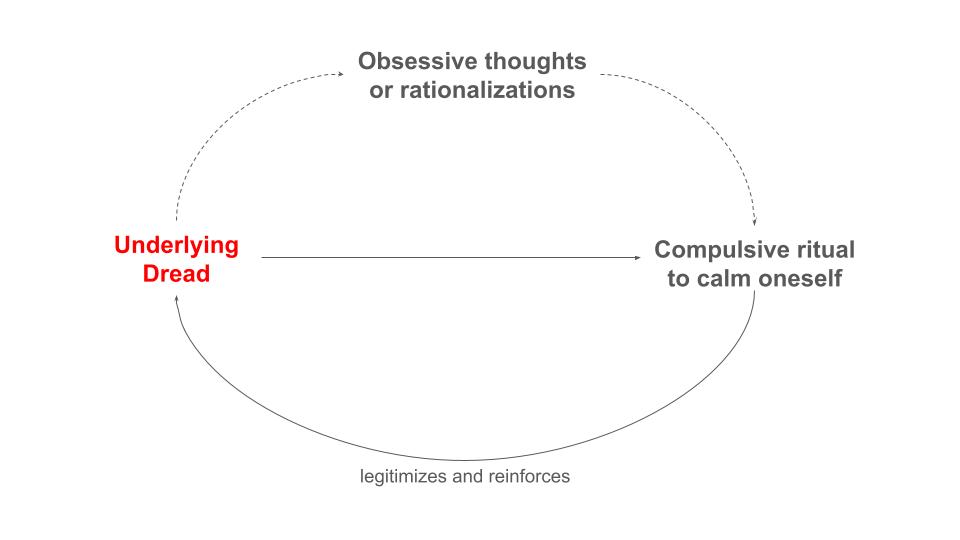
Related Posts

Don’t grow your org fast
Published on November 18, 2025 7:47 AM GMTThis is an essay in the spirit of…
Apply to Vanessa’s mentorship at PIBBSS
Published on January 14, 2026 9:15 AM GMTThe applications for the PIBBSS summer fellowship 2026…
Parameters Are Like Pixels
Published on January 14, 2026 1:45 PM GMTMore parameters = better model. So went the…